Diagnosing Codebase Issues with Git Commands
By "Ally Piechowski"
AI Summary
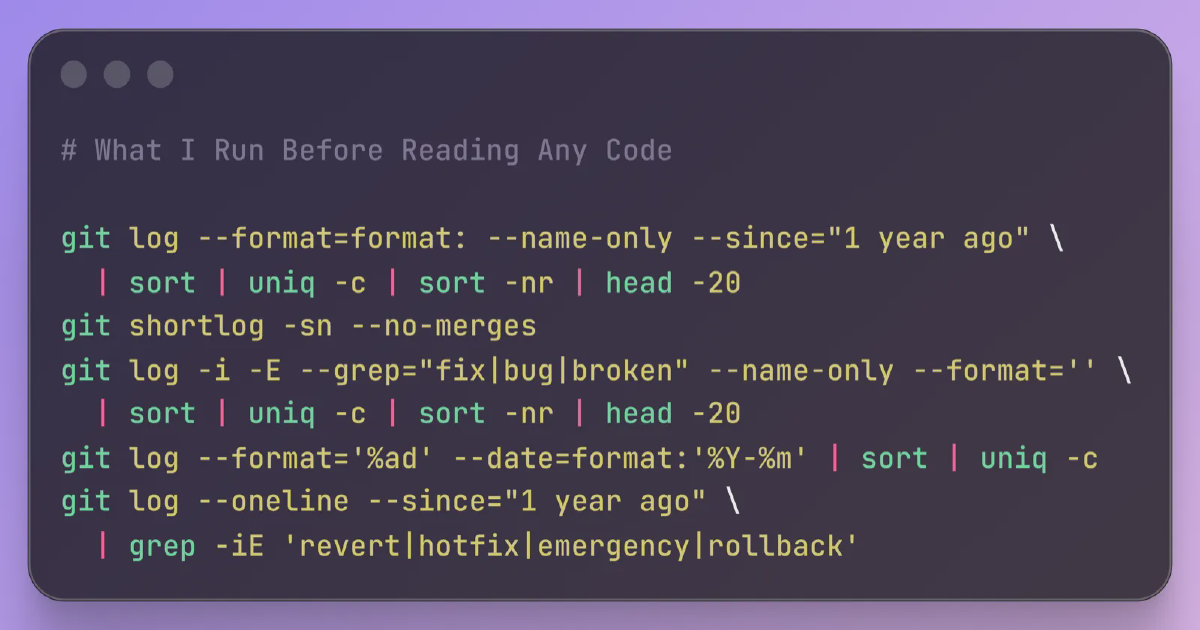
When diving into a new codebase, my first move isn't to open the code but to fire up the terminal and run a few strategic git commands. These commands reveal the health of the project by highlighting churn hotspots, identifying key contributors, and pinpointing bug clusters.
## What Changes the Most
Using `git log`, I identify the 20 most-changed files over the past year. High churn doesn't always signal trouble, but when a file is frequently altered and no one wants to own it, that's a red flag. Such files often become a patchwork of fixes, with unpredictable consequences for even minor edits. Cross-referencing these files with bug hotspots can highlight significant risks.
## Who Built This
The `git shortlog` command helps me assess the bus factor by ranking contributors by commit count. If one person dominates the commit history, their absence could spell disaster. I also check for recent activity to ensure the original builders are still maintaining the system. However, squash-merge workflows can obscure authorship, so understanding the team's merge strategy is crucial.
## Where Do Bugs Cluster
Filtering commits for bug-related keywords with `git log` reveals where bugs tend to cluster. Files that appear both here and in the churn list are particularly risky, as they are frequently patched but never fully resolved. This analysis depends on the team's discipline in writing descriptive commit messages.
## Is This Project Accelerating or Dying
By examining commit counts over time, I can gauge the project's momentum. A steady rhythm is healthy, while a sharp decline often indicates team changes. Periodic spikes suggest batch releases rather than continuous deployment. This data provides insights into team dynamics rather than code quality.
## How Often Is the Team Firefighting
Checking for frequent reverts and hotfixes can indicate issues with the deploy process or testing reliability. While a few over a year are normal, frequent occurrences suggest deeper problems. Even zero results can be telling, either indicating stability or poor commit message practices.
These commands provide a quick yet insightful overview of a codebase's health, guiding where to focus initial attention and what to scrutinize further.
Key Concepts
Codebase churn refers to the frequency and volume of changes made to a codebase over time. High churn can indicate active development or potential instability if changes are frequent and unplanned.
The bus factor is a measure of risk related to the concentration of knowledge within a team. It indicates how many team members need to be incapacitated before the project is jeopardized.
Category
ProgrammingOriginal source
https://piechowski.io/post/git-commands-before-reading-code/More on Discover
Summarized by Mente
Save any article, video, or tweet. AI summarizes it, finds connections, and creates your to-do list.
Start free, no credit card