NASA and the Military: A New Era of Space Exploration and Defense
By Stephen Clark
AI Summary
At the Kennedy Space Center, the US military's longstanding involvement with NASA's human spaceflight program is evident as Artemis II prepares for launch. This mission marks the first crewed journey to the Moon's vicinity since 1972, with Navy test pilots Reid Wiseman and Victor Glover at the helm. The Space Force plays a crucial role, ensuring public safety and readiness to intervene if necessary, while the Navy stands by to recover the Orion spacecraft upon its return.
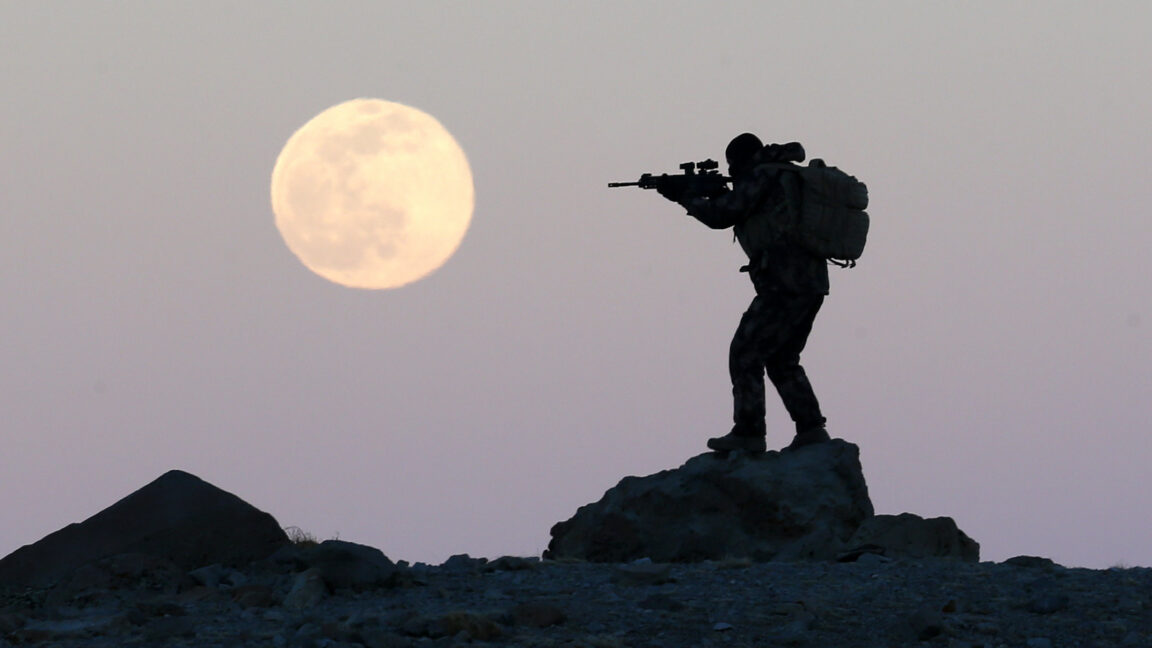
The military's role in space is evolving as it now views space as a potential battlefield. The Space Force is developing a 15-year roadmap to address threats and priorities, including the possibility of military operations in cislunar space. This shift is driven by the great power competition with China, which is also making strides in space exploration and military capabilities.
President Trump's executive order emphasizes the need to protect US interests in space, extending to the Moon. Thomas Ainsworth of the Air Force highlights the importance of integrating cislunar capabilities into the Space Force, while Gen. Stephen Whiting of US Space Command stresses the need to track activities in this region.
Space Command is preparing to use Artemis II as a training opportunity, refining tactics and procedures for future operations. The military's interest in the Moon is not about immediate territorial claims but rather about ensuring the protection of US interests as human activity expands into the Solar System.
NASA's Artemis program has shifted focus from a lunar orbiting space station to establishing a permanent base on the Moon's surface. This strategic move acknowledges the Moon's potential resources, such as water ice and minerals, which could support further exploration and economic activities.
The military's initial role in lunar operations will mirror its Earth orbit duties: observing and cataloging space traffic. The Air Force Research Laboratory's Oracle project aims to demonstrate mobility and navigation in cislunar space, crucial for tracking objects around the Moon.
Challenges remain in observing cislunar space due to the vast distances and lack of precise navigation systems like GPS. The risk of space debris from satellite breakups poses a threat to scientific missions and emerging lunar economic activities.
Space Force Maj. Gen. Anthony Mastalir underscores the importance of understanding new orbital dynamics and potential threats to US assets. While the military's current focus is on terrestrial conflicts, the possibility of space becoming a theater of operations cannot be ignored.
Key Concepts
Cislunar space refers to the region of space that lies between the Earth and the Moon, including the Moon's orbit. It is a strategic area for space exploration and potential military operations.
Space militarization involves the use of space for military purposes, including the deployment of weapons and surveillance systems to gain strategic advantages.
Category
Space ExplorationOriginal source
https://arstechnica.com/space/2026/03/nasa-is-leading-the-way-to-the-moon-but-the-military-wont-be-far-behind/More on Discover
Summarized by Mente
Save any article, video, or tweet. AI summarizes it, finds connections, and creates your to-do list.
Start free, no credit card