NIST Scientists Pioneer Photonic Chips for Quantum and AI Technologies
By Gabriel Popkin
AI Summary
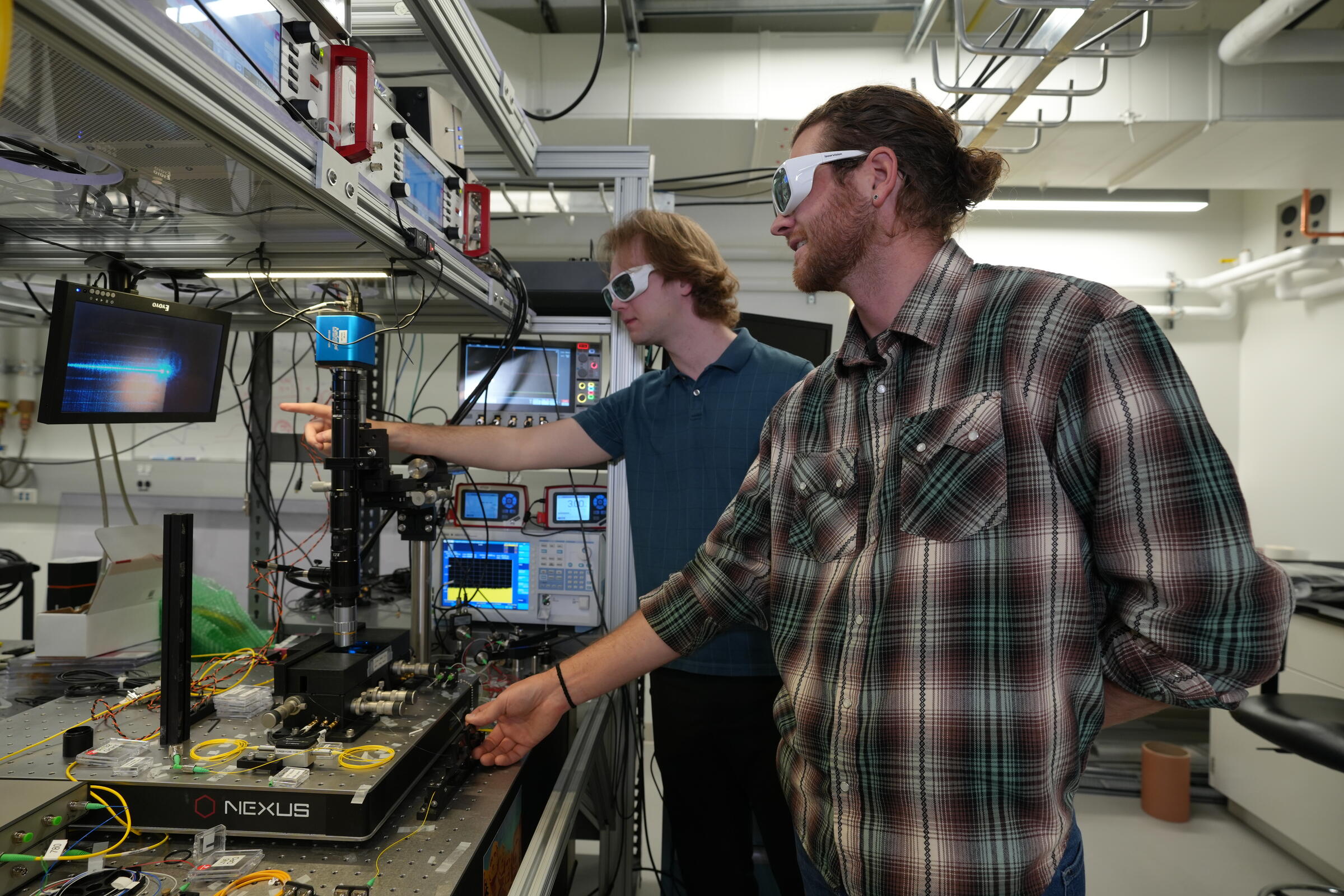
In a groundbreaking development, NIST scientists have created photonic chips that integrate complex circuits for light, potentially revolutionizing technologies like AI, quantum computing, and optical atomic clocks. These chips, made by layering specialized materials such as silicon, lithium niobate, and tantalum pentoxide, can manipulate light in ways previously unimaginable. By converting laser light into a spectrum of colors, these chips could make quantum technologies more accessible and portable, overcoming the limitations of current bulky and expensive lasers. The chips are designed to output unique colors tailored to specific quantum applications, like the precise wavelengths needed for manipulating rubidium and strontium atoms in quantum computers. Beyond quantum, these photonic circuits could enhance AI tools and virtual reality displays by efficiently routing signals. Although not yet ready for mass production, the collaboration with Octave Photonics suggests a promising path toward scaling this technology. The potential applications are vast, from predicting natural disasters with portable optical clocks to advancing drug and material research with quantum computers.
Key Concepts
Integrated photonics involves the use of light to perform functions traditionally handled by electronic circuits, using devices like lasers and waveguides on a chip.
Quantum technologies leverage the principles of quantum mechanics to develop new types of devices and systems, such as quantum computers and optical atomic clocks, which offer capabilities far beyond classical systems.
Category
TechnologyOriginal source
https://www.nist.gov/news-events/news/2026/04/any-color-you-nist-scientists-create-any-wavelength-lasers-tiny-circuitsMore on Discover
Summarized by Mente
Save any article, video, or tweet. AI summarizes it, finds connections, and creates your to-do list.
Start free, no credit card