Renewable Energy: A Global Shift Towards Sustainability
By Anthony Cuthbertson
AI Summary
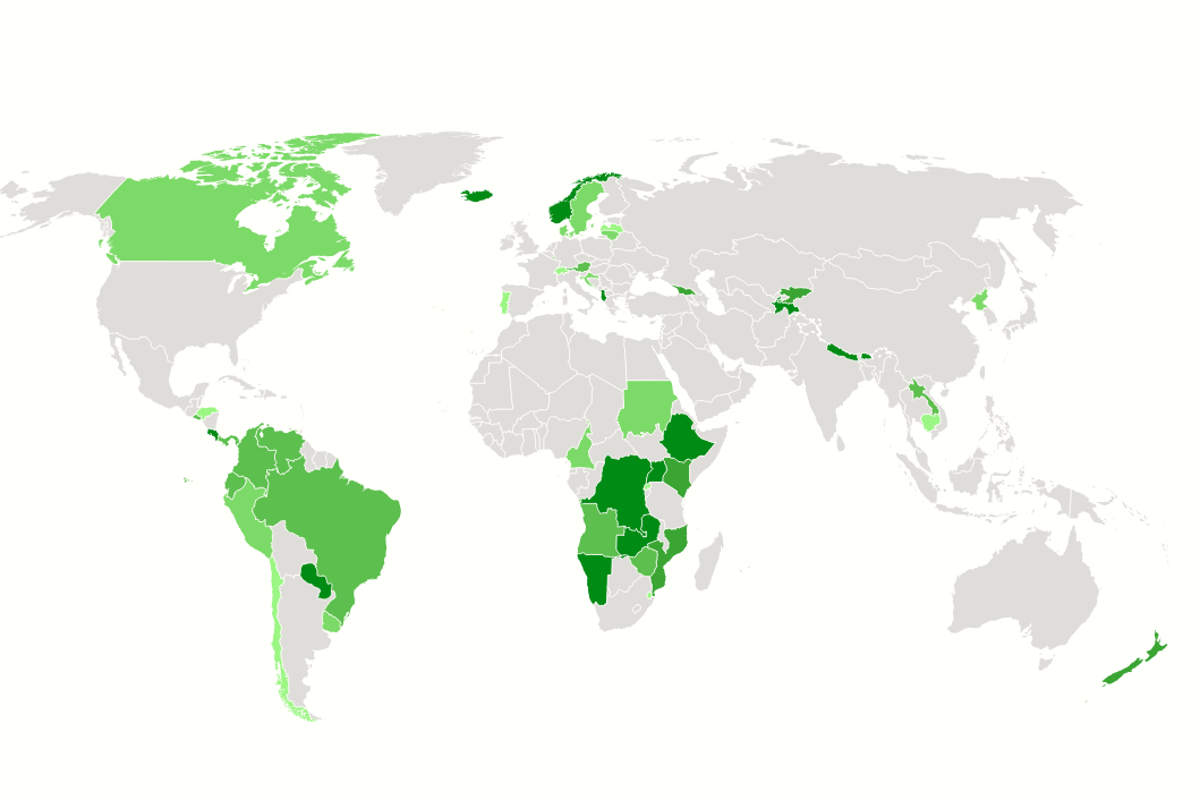
Seven countries, including Albania, Bhutan, and Iceland, have achieved a remarkable feat by generating nearly all their electricity from renewable sources such as geothermal, hydro, solar, and wind power. These nations exemplify the potential of renewable energy, with data from the IEA and IRENA showing that over 40 other countries have also surpassed the 50% mark in renewable electricity generation. Professor Mark Jacobson from Stanford University emphasizes that the transition to renewable energy doesn't require miracle technologies but rather a commitment to electrifying everything using Wind, Water, and Solar (WWS) power. Countries like Germany have demonstrated the feasibility of operating on 100% renewable energy for short periods.
In the UK, renewable energy accounted for 41.5% of electricity generation in 2022, with Scotland achieving an impressive 113% of its electricity consumption from renewables, primarily wind power. This progress highlights the potential of renewable resources in achieving net-zero goals. Looking ahead, solar energy is expected to dominate global electricity supplies, thanks to advancements in efficiency and cost reductions, particularly with the development of perovskite solar cells.
A study by the University of Exeter and University College London suggests that solar energy has reached an 'irreversible tipping point,' positioning it as the world's main energy source by 2050. The researchers argue that technological and economic advancements have set in motion a trajectory where solar energy will inevitably dominate global electricity markets, driven by its widespread availability and increasing economic attractiveness.
Key Concepts
Energy generated from natural resources that are replenished on a human timescale, such as sunlight, wind, rain, tides, waves, and geothermal heat.
Energy harnessed from the sun's rays, typically converted into electricity using photovoltaic cells or concentrated solar power systems.
Category
EnvironmentOriginal source
https://www.the-independent.com/tech/renewable-energy-solar-nepal-bhutan-iceland-b2533699.htmlMore on Discover
Summarized by Mente
Save any article, video, or tweet. AI summarizes it, finds connections, and creates your to-do list.
Start free, no credit card