The Convergence of Robotics and Automotive Industries
By Jonathan 'JMill' Miller
AI Summary
The transformation of modern cars into robotic platforms is reshaping industries that rely on moving physical objects. Tesla's shift from car production to manufacturing humanoid robots exemplifies this trend, as the company repurposes its facilities to produce Optimus robots at scale. This shift is driven by advanced system architectures that are more akin to robotics than traditional automotive designs. Tesla's use of a 48-volt architecture, Ethernet connections, and zonal controllers highlights a significant departure from conventional vehicle wiring systems.
Ford is also adopting similar architectures, moving towards a more efficient and streamlined design with its upcoming electric vehicle platform. This convergence is not limited to Tesla and Ford; automotive suppliers like Hyundai Mobis are expanding their focus to include robotics components, leveraging the cost structures and scalability of the automotive industry to support robotics development.
The demand for digitization and precision in industries such as construction, logistics, and defense is driving the adoption of robotic system architectures. Chinese manufacturers are rapidly increasing their production capacities for robotics components, positioning themselves as key players in the global supply chain.
Electrified actuators are revolutionizing heavy equipment by offering greater efficiency and control compared to traditional hydraulic systems. Companies like RISE Robotics are developing innovative actuator technologies that eliminate the need for hydraulic systems, offering significant environmental and operational benefits.
While some experts, like MIT's Rodney Brooks, view the humanoid robot boom as a potential bubble, the underlying architectural and actuation advancements are applicable across various industries. This presents significant opportunities for component suppliers and investors, as the market for robotic systems expands beyond traditional boundaries.
Upcoming developments in robotics, such as Google's partnership with Foxconn and Boston Dynamics' collaboration with Google DeepMind, indicate a growing focus on integrating advanced robotics software with hardware. The launch of the Robotics Core will provide an in-depth exploration of these concepts, offering insights into the technological and economic implications of this evolving landscape.
Key Concepts
A framework for designing and integrating components in robotics, focusing on centralized computing, sensor fusion, and software-defined actuation to enhance control and autonomy.
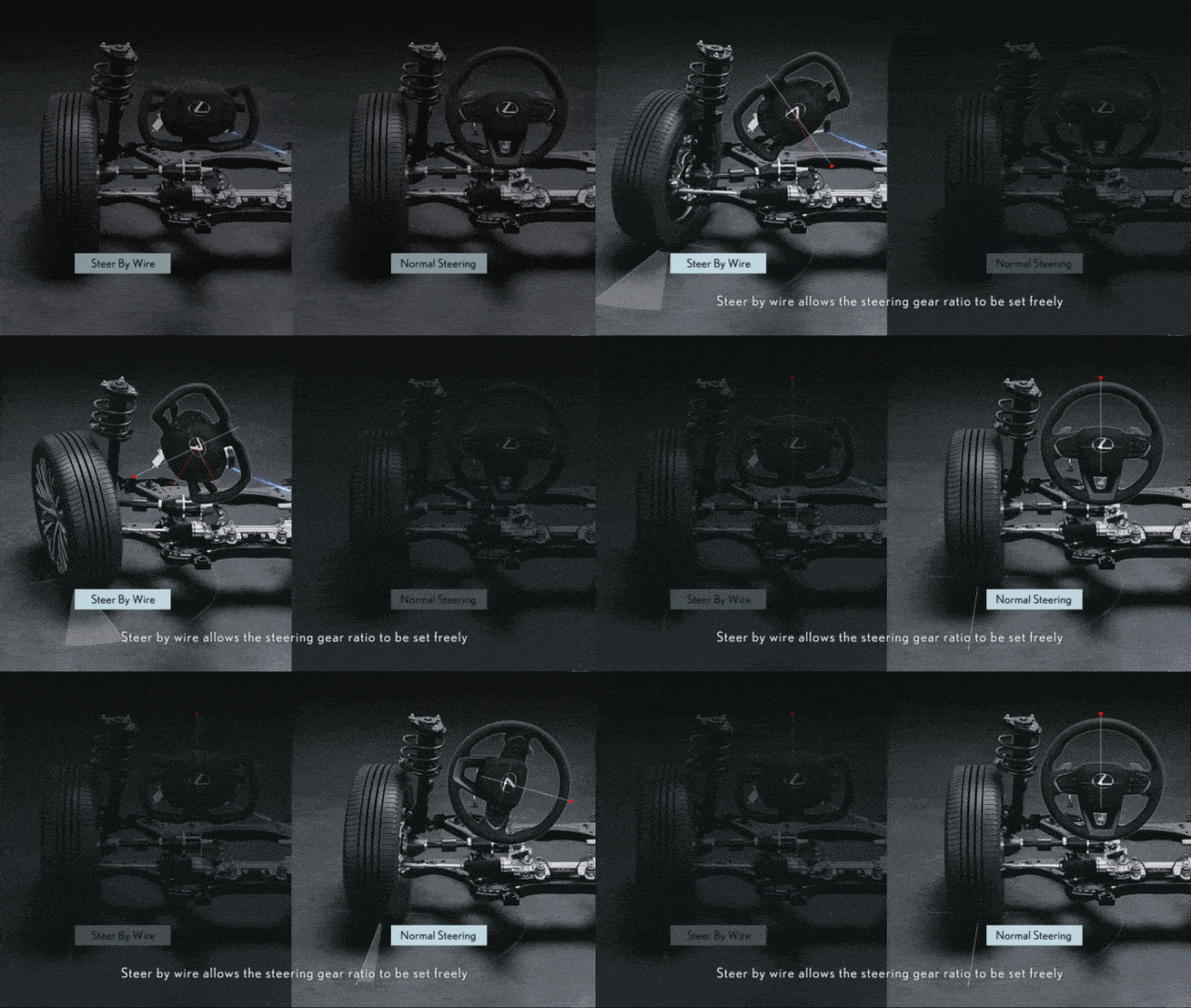
A method of using electric motors and actuators to control movement in machinery, offering improved efficiency and control over traditional hydraulic systems.
Category
TechnologyOriginal source
https://telemetry.endeff.com/p/robots-eat-carsMore on Discover
Summarized by Mente
Save any article, video, or tweet. AI summarizes it, finds connections, and creates your to-do list.
Start free, no credit card