The Winchester Mystery House: A New Era of Software Development
By Drew Breunig
AI Summary
In 1998, Eric S. Raymond's "The Cathedral and the Bazaar" introduced two software development models: the Cathedral, a closed and meticulously planned approach, and the Bazaar, an open, community-driven method enabled by the internet. This latter model has dominated open source development for decades. However, with the advent of AI, we are entering a new era characterized by the Winchester Mystery House model, where code is cheap, and developers create sprawling, idiosyncratic software akin to Sarah Winchester's architectural oddity.
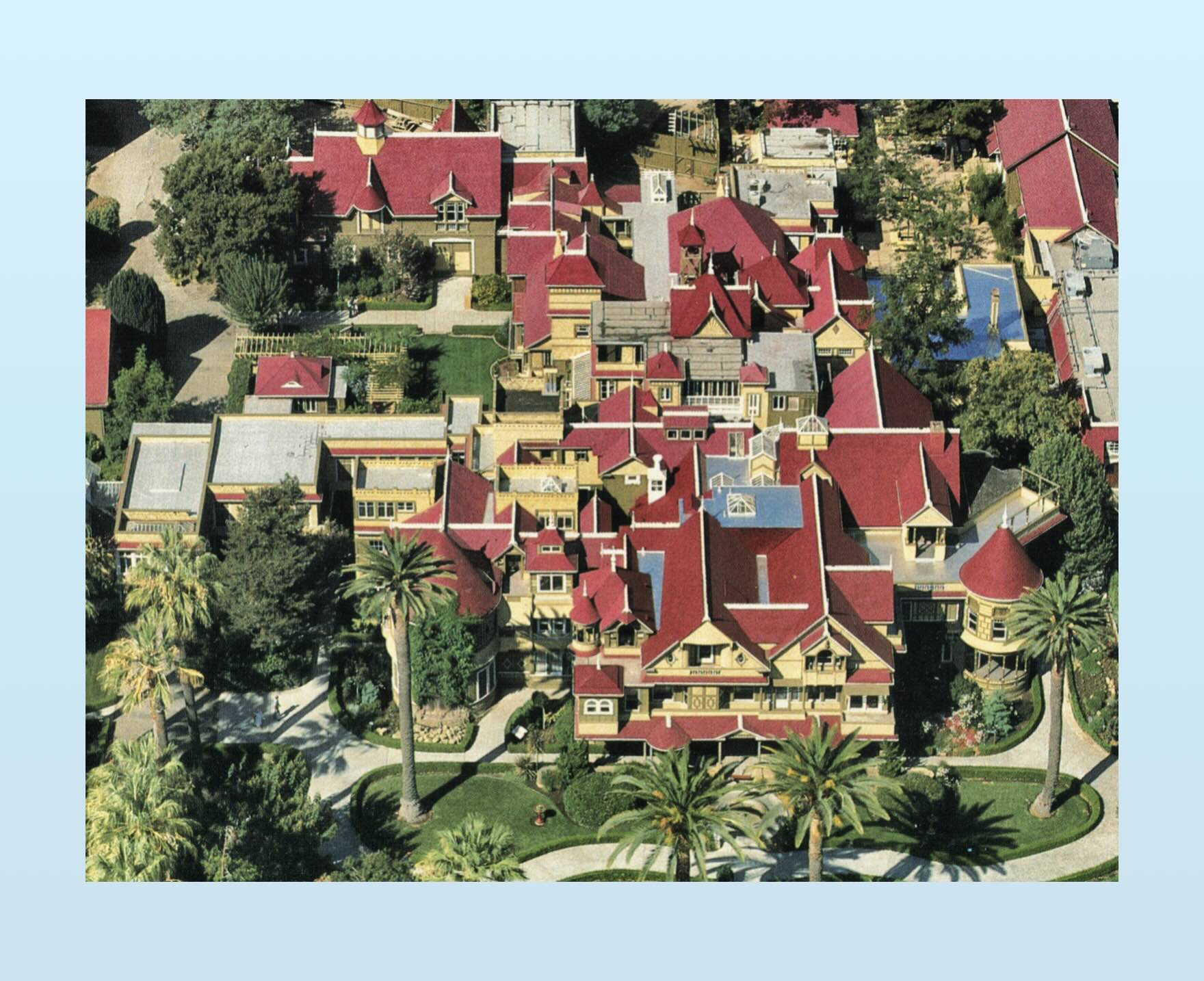
Sarah Winchester, with her vast fortune, built an eccentric mansion without formal architectural training, driven by passion and unlimited resources. Her house, filled with practical innovations and peculiar designs, mirrors today's software development landscape, where AI-generated code allows developers to build personalized tools without traditional constraints.
The proliferation of cheap code is exemplified by Claude Code's GitHub activity, where AI contributes 1,000 lines of code per commit, vastly outpacing human programmers. This abundance of code shifts the focus from communal feedback to individual creation, as developers build tools tailored to their needs, much like Sarah Winchester's mansion.
Winchester Mystery Houses in software are highly personalized, sprawling projects that reflect the developer's desires. They often lack documentation and are inscrutable to outsiders. These projects expand continuously, adding new functions and repositories without pruning, as the cost of code is negligible.
Despite the rise of these personal projects, the Bazaar model remains relevant. However, the influx of AI-generated contributions has overwhelmed open source repositories, necessitating new systems to manage the deluge. The challenge is to develop tools that allow maintainers to process contributions at machine speed and surface valuable ideas amidst the noise.
The coexistence of the Bazaar and Winchester Mystery Houses is possible, as seen with OpenClaw, a modular project that integrates various systems and allows developers to build personalized tools. The key is to focus communal efforts on the foundational, less exciting aspects of development, while leaving the fun, personalized elements to individual creators.
Ultimately, the limits of code are in communication. As we navigate this new era, we must find ways to make attention cheap, enabling maintainers to absorb contributions efficiently and ensure that the best ideas are not lost in the sea of code.
Key Concepts
A collaborative approach to software development where source code is made publicly available for anyone to view, modify, and distribute.
A metaphor for a new software development model where developers create highly personalized, sprawling, and idiosyncratic projects, akin to Sarah Winchester's eccentric mansion.
Category
TechnologyMore on Discover
Summarized by Mente
Save any article, video, or tweet. AI summarizes it, finds connections, and creates your to-do list.
Start free, no credit card