Victor Glover Reflects on Artemis II's Journey and Orion's Performance
By Eric Berger
AI Summary
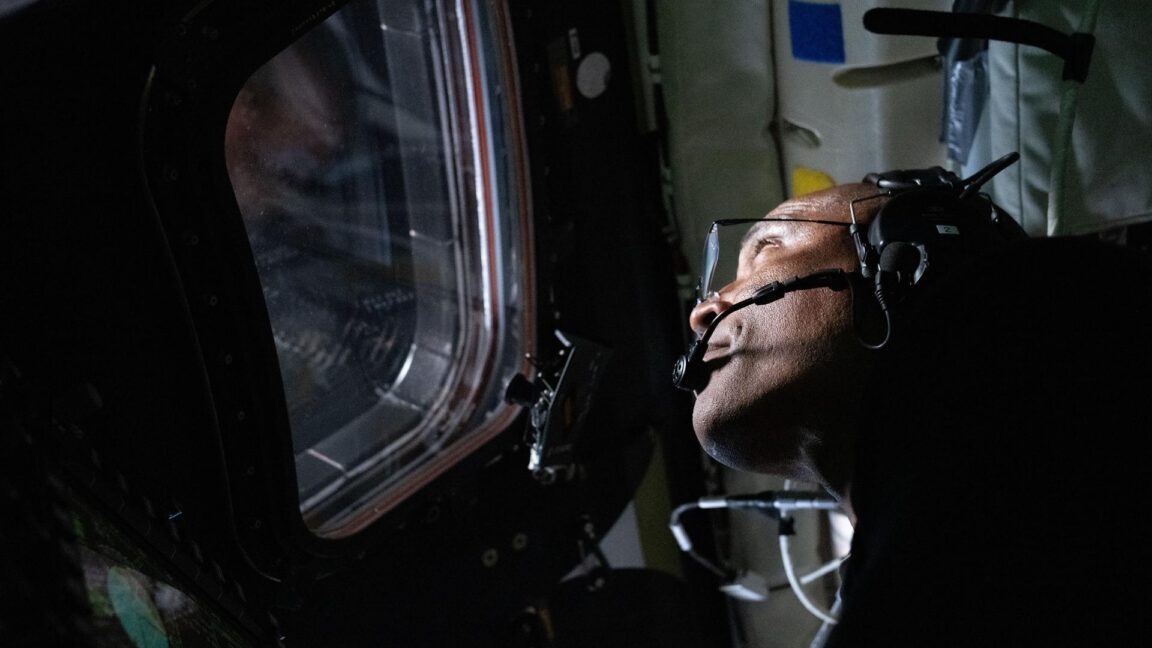
After returning from the Artemis II mission, I had the chance to share my experiences piloting the Orion spacecraft during our lunar flyby. The mission was a significant step in our modern Apollo program, Artemis, which aims to return humans to the Moon and establish a semi-permanent base there. As a seasoned pilot, I was thrilled to handle Orion with its traditional controls, which offered a tactile experience compared to the touchscreen interface of the Crew Dragon.
The Orion spacecraft exceeded our expectations, performing better than simulations predicted. The vehicle's responsiveness and the integrated system's performance were impressive, showcasing the dedication and skill of the modelers and flight controllers. This success is crucial as it sets the stage for future missions like Artemis III and IV, which will involve complex operations like docking and landing.
Reflecting on the mission, I emphasized the importance of testing critical capabilities, such as manual docking, which could be vital in emergencies. The experience of flying both Dragon and Orion highlighted the strengths of each system, with Orion's hand controllers allowing for precision without needing to divert my gaze from the task at hand.
Reentry was a particularly intense experience, one I had been mentally preparing for over three years. The sensations during reentry, from the flames visible through the window to the unexpected free fall before the main parachutes deployed, were vivid and unforgettable. Despite the inherent risks, I remained focused on my role, knowing that my actions were crucial for a successful landing.
The mission was not only a technical success but also a personal triumph, filled with moments of pure elation and camaraderie among the crew. As we move forward, the stories we choose to tell about these missions will shape the future of space exploration and inspire the next generation of explorers.
Key Concepts
Spacecraft piloting involves the operation and control of a spacecraft, requiring skills to manage both manual and automated systems during various phases of a mission.
Mission success in space exploration refers to achieving the planned objectives of a mission, which can include scientific research, technological validation, and safe return of the crew.
Category
Space ExplorationOriginal source
https://arstechnica.com/space/2026/04/artemis-ii-pilot-describes-landing-in-orion-from-intense-to-pure-elation/More on Discover
Summarized by Mente
Save any article, video, or tweet. AI summarizes it, finds connections, and creates your to-do list.
Start free, no credit card