Ants in Arizona: A Symbiotic Cleaning Ritual
AI Summary
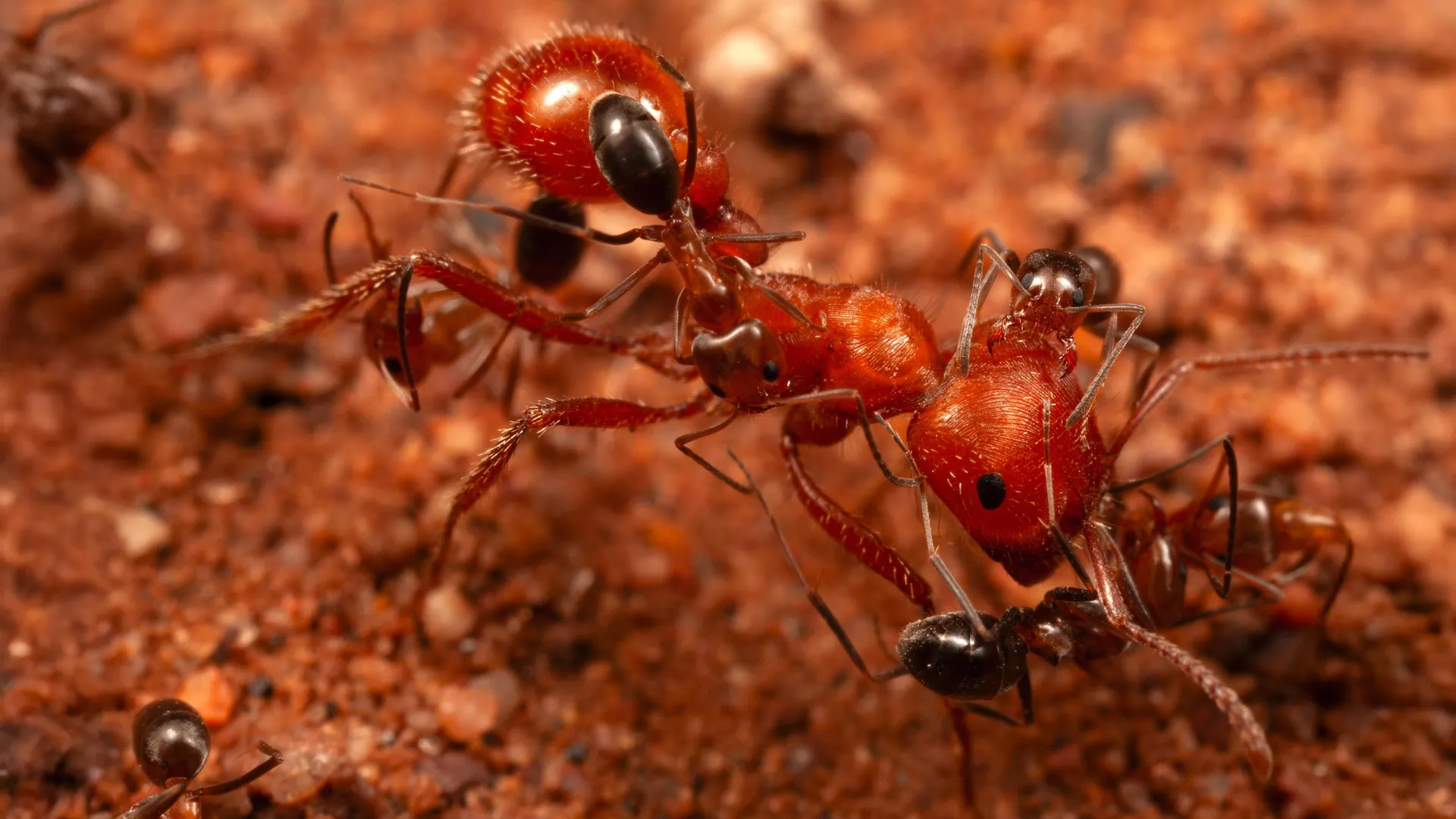
In the arid landscapes of southeastern Arizona, an unexpected relationship unfolds between two ant species. Small cone ants engage in a unique cleaning behavior with much larger harvester ants, reminiscent of marine cleaner fish. This interaction was first observed by entomologist Mark Moffett, who likens it to the symbiotic relationships seen in ocean ecosystems. During his research in the Chiricahua Mountains, Moffett noticed harvester ants standing still near cone ant nests, allowing the smaller ants to climb on them and clean their bodies. This behavior, never before documented in ants, involves the cone ants using their tongue-like mouthparts to remove particles from the harvester ants, even venturing into their open jaws.
Over several days, Moffett documented numerous interactions, noting that the harvester ants would approach the cone ant nests and stand with open mandibles, inviting the cleaning process. The sessions varied in duration, with the harvester ants remaining passive and non-aggressive throughout. This behavior suggests a mutual benefit: cone ants may feed on energy-rich particles from the harvester ants, while the larger ants receive thorough grooming in hard-to-reach areas.
The discovery raises questions about the benefits for both species, such as whether the cleaning reduces infections or affects their microbiomes. Moffett emphasizes the importance of observing natural environments to uncover such hidden behaviors, reminding us of the vast unknowns in animal behavior. This finding underscores the potential for new discoveries outside laboratory settings, highlighting the intricate and often surprising relationships in nature.
Key Concepts
Symbiotic relationships are interactions between two different organisms living in close physical association, often to the benefit of both parties. These relationships can be mutualistic, commensal, or parasitic.
Mutualism is a type of symbiotic relationship where both species involved benefit from the interaction. This can involve resource exchange, protection, or other forms of cooperation.
Category
BiologyMore on Discover
Summarized by Mente
Save any article, video, or tweet. AI summarizes it, finds connections, and creates your to-do list.
Start free, no credit card