Artemis II: A New Era of Human Exploration of the Moon
By Stephen Clark
AI Summary
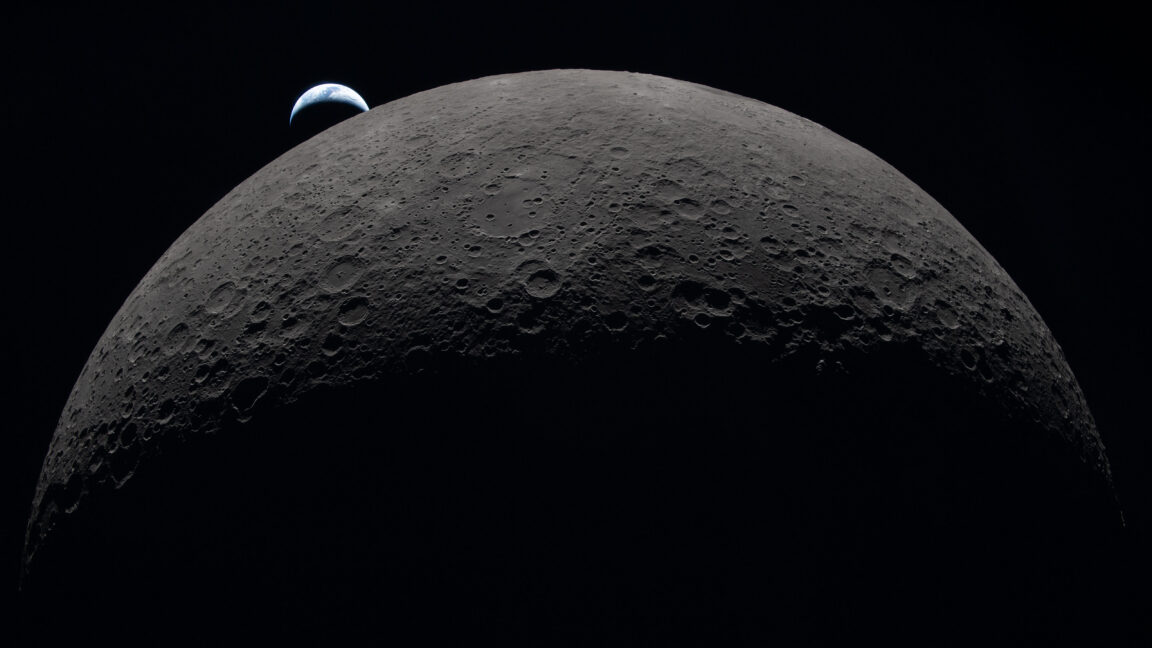
The Artemis II mission marked a historic moment as the first crewed lunar mission in over five decades. As the Orion spacecraft looped behind the Moon, it established a laser communications link with Earth, transmitting a trove of high-resolution images captured by astronauts using Nikon cameras and iPhones. This mission, while primarily a technology demonstration, reignited public excitement and showcased the potential of human involvement in planetary exploration.
The astronauts, Reid Wiseman, Victor Glover, Christina Koch, and Jeremy Hansen, shared their awe-inspiring views of the Moon's far side, a sight previously reserved for robotic missions. Despite the Moon's static geological state, the mission's primary value lay in its public relations impact, reminiscent of the Apollo era's excitement.
NASA set ten scientific objectives for the Artemis II crew, providing them with a crash course in geology and field trips for practical experience. However, the mission's scientific yield was limited due to the brief observation window from 4,000 miles away. The mission's true significance was in demonstrating the integration of human observations into space exploration, a shift from the reliance on robotic sensors.
The astronauts' real-time feedback provided invaluable insights, such as the perception of color gradients and the Moon's three-dimensionality. They also encountered challenges like glare from the Sun and Earth, which they mitigated with a makeshift window shroud.
The mission highlighted the advantages of human perception, with astronauts observing subtle color changes and impact flashes on the Moon's surface. These observations could guide future missions in selecting high-priority landing sites, contributing to our understanding of the Moon's and Earth's history.
While Artemis II's scientific contributions were modest, the mission laid the groundwork for future lunar exploration. The ultimate goal is to have astronauts on the Moon's surface by 2028, where the most significant scientific discoveries are expected to occur. The mission rekindled the spirit of human spaceflight, emphasizing the enhanced scientific return when humans are involved.
The Artemis II mission, despite its limitations, inspired awe and excitement, reminiscent of the Apollo missions. The images and experiences shared by the astronauts captured the imagination of the public and the scientific community, paving the way for future lunar exploration.
Key Concepts
The practice of sending humans into space to explore celestial bodies, conduct scientific research, and expand human presence beyond Earth.
The process of collecting data and information through direct or indirect means to understand natural phenomena.
Category
Space ExplorationOriginal source
https://arstechnica.com/space/2026/04/the-moon-is-already-on-google-maps-did-artemis-ii-really-tell-us-anything-new/More on Discover
Summarized by Mente
Save any article, video, or tweet. AI summarizes it, finds connections, and creates your to-do list.
Start free, no credit card