Capturing the Invisible: Winners of the 2025 Global Physics Photowalk
By By Zack Savitsky April 1, 2026
AI Summary
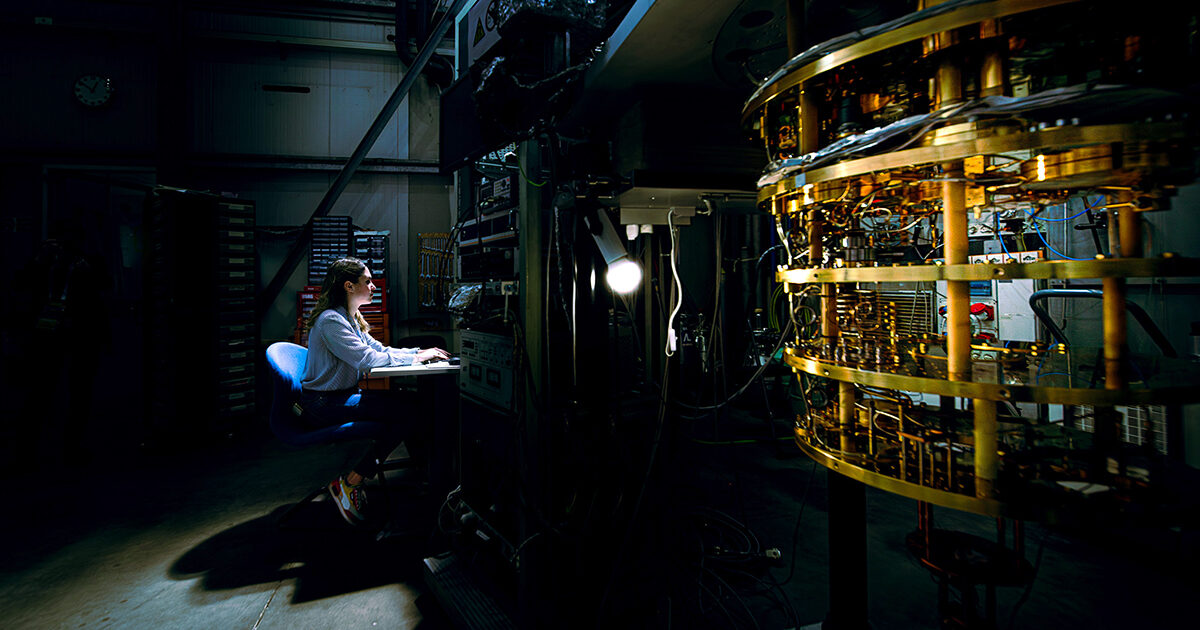
In the 2025 Global Physics Photowalk, photographers from around the world captured the hidden beauty of particle physics labs, showcasing the intricate relationship between science and art. At the CryOgenic Laboratory for Detectors (COLD) in Italy, Marco Donghia's winning photograph depicted his sister Raffaella Donghia operating a cryostat, highlighting the human connection to advanced technology used to explore dark matter. This image, along with others from labs worldwide, was selected by a panel of judges for its ability to convey the wonder of scientific discovery.
The competition invited both amateur and professional photographers to find beauty in the often unseen world of subatomic particles and force fields. Dmitri Denisov, a physicist and judge, noted the surprising harmony between artistic and scientific perspectives, emphasizing photography's role in communicating scientific excitement to the public.
Among the notable entries was an image of the Cubic Kilometer Neutrino Telescope off the coast of France, which uses optical sensors to detect neutrinos, particles that could explain the universe's matter. Another striking photo from CERN depicted the creation of Rutherford cables for particle accelerators, illustrating the blend of engineering and natural principles.
The contest also featured a photo of a silicon strip detector from CERN's NA50 experiment, which provided evidence for quark-gluon plasma, a new state of matter. In Italy, the AGATA photon detector and PRISMA magnetic spectrometer were captured in action, exploring exotic nuclei.
Other entries included a tunnel at the Sanford Underground Research Facility in South Dakota, part of a plan for future neutrino and dark matter experiments, and a service corridor at the Large Heavy Ion National Accelerator in France, which won the public vote for its depiction of the SPIRAL2 accelerator's infrastructure.
Yannig Van De Wouwer's close-up of a vacuum pipe casing at the same French facility earned second place, while the SuperKEKB particle accelerator in Japan was showcased for its record-breaking luminosity. The IN2P3 Computing Center in France was also featured, highlighting its role in data processing for the Large Hadron Collider.
The competition celebrated the intersection of art and science, revealing the hidden beauty and complexity of the world's leading physics laboratories.
Key Concepts
Particle physics is the branch of physics that studies the fundamental constituents of matter and the forces of nature. It explores the smallest known particles and their interactions, often using high-energy accelerators.
Scientific communication involves the dissemination of scientific knowledge and discoveries to a broader audience, often through various media, to increase public understanding and engagement with science.
Category
ScienceOriginal source
https://www.quantamagazine.org/global-physics-photowalk-2025-winners-revealed-20260401/More on Discover
Summarized by Mente
Save any article, video, or tweet. AI summarizes it, finds connections, and creates your to-do list.
Start free, no credit card