Crafting the Futuristic World of 'The Fifth Element'
AI Summary
Audiences have rekindled their love for the space opera genre, as evidenced by the success of the Star Wars Special Editions. However, Luc Besson's 'The Fifth Element' stands apart with its unique blend of absurdist influences from Jean-Luc Godard and the imaginative artistry of Jean 'Moebius' Giraud and Jean-Claude Mezieres. This film, a visual feast, was brought to life with the help of production designer Dan Weil and the innovative effects team at Digital Domain.
The film's universe spans from a towering New York City to a luxurious space cruise ship, necessitating a diverse array of visual effects. Mark Stetson, a first-time visual effects supervisor, led a team of 170 artists and model makers to complete over 220 effects shots. Besson's hands-on approach meant he collaborated closely with Stetson, particularly in areas outside his expertise.
The film opens with a spaceship designed by Moebius, descending upon an Egyptian temple. This sequence involved intricate model work and digital matte paintings, blending practical effects with digital wizardry. The production utilized Arriflex cameras, despite initial skepticism, and imported Kodak film stock to ensure steadiness for effects-heavy sequences.
A pivotal scene involves the Mondoshawan ship being attacked by Mangalores, showcasing dynamic miniature work and pyrotechnics. The destruction was carefully crafted to avoid traditional explosion tropes, instead opting for a more nuanced depiction of the crash.
The film's antagonist, a planet-sized entity known as Evil, was realized through complex CGI. The visual effects team, led by Karen Goulekas, developed innovative techniques to animate its lava and crust, creating a menacing presence that reacts violently to attacks.
In a lighter moment, the protagonists escape Earth on a shuttle to the Fhloston Paradise, a vibrant space cruise ship. The ship's reflective paint posed challenges, but the team used backlit UV techniques to capture its brilliance.
A standout sequence features an alien diva performing aboard the cruise ship. The scene combined live-action shots from London's Covent Garden with greenscreen elements, seamlessly integrating digital backgrounds and CG planets.
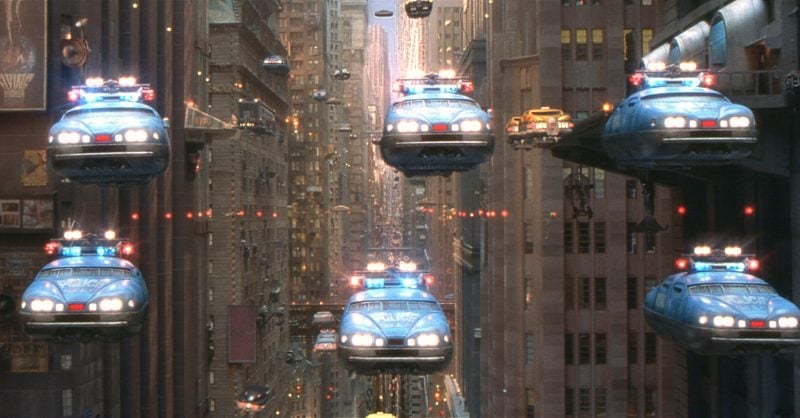
The film's most ambitious sequence is a high-speed chase through a futuristic New York City. This involved a blend of miniatures, CG models, and digital matte paintings, with pre-visualization playing a crucial role in planning the complex shots.
The production's vision of New York was a regimented, vertical cityscape, reflecting a distinctly European perspective on urban design. The effects team faced challenges in lighting and perspective, but innovative techniques like 'fractured light' helped create a vibrant, dynamic city.
The cab chase sequence, a centerpiece of the film, required precise coordination of miniatures and CG elements. The team developed a procedural pipeline to manage the complex traffic scenes, ensuring a seamless blend of real and digital elements.
Throughout production, Stetson and his team navigated the challenges of realizing Besson's vision, often without direct feedback. Their efforts culminated in a visually stunning film that pushed the boundaries of sci-fi aesthetics.
Key Concepts
The process of creating or enhancing imagery for film using digital or practical techniques. It involves the integration of live-action footage and generated imagery to create environments that look realistic but would be dangerous, costly, or impossible to capture on film.
The process of constructing an imaginary world, often with its own history, geography, and laws of nature. In science fiction, this often involves creating futuristic settings with advanced technology and alien cultures.
Category
FilmOriginal source
https://theasc.com/articles/fantastic-voyage-creating-the-futurescape-for-the-fifth-elementMore on Discover
Summarized by Mente
Save any article, video, or tweet. AI summarizes it, finds connections, and creates your to-do list.
Start free, no credit card