Exploring the Fascinating World of Unusual Trees
By Waqas Younas
AI Summary
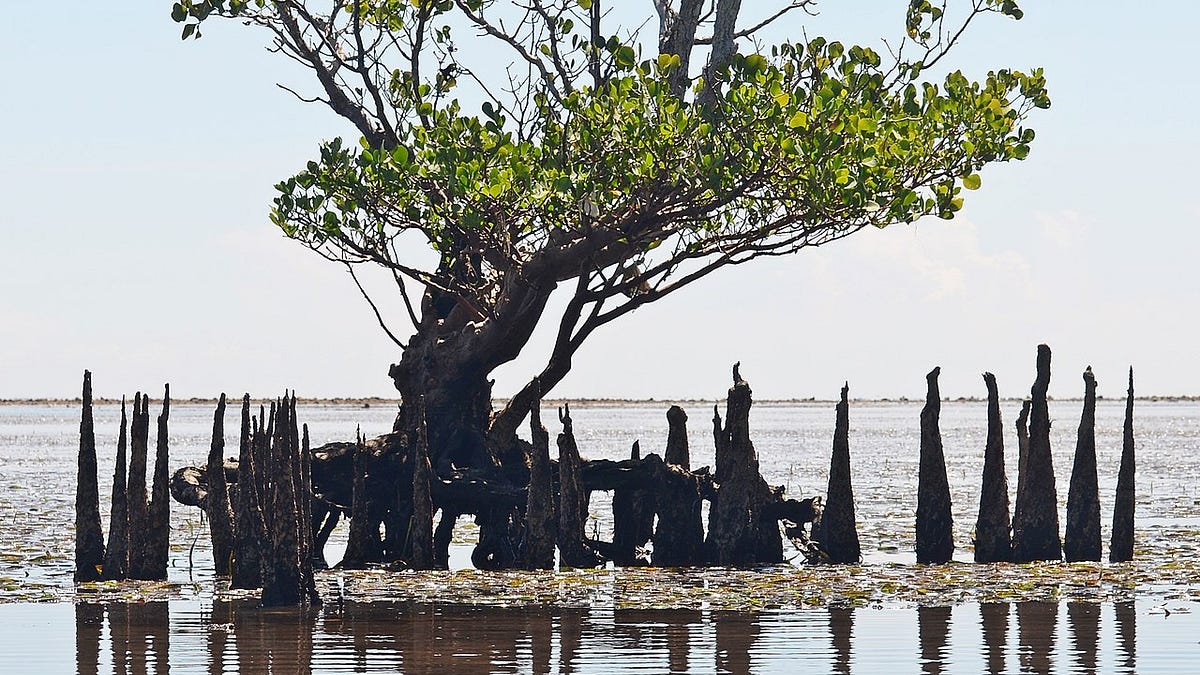
I love wandering through old bookstores, and recently I stumbled upon a treasure: a complete set of the Encyclopaedia Britannica, 15th edition. While diving into its pages, I discovered a captivating entry on unusual trees, which I felt compelled to share. Let's start with mangroves, those coastal guardians that spread seaward, protecting the land behind them. Their seeds transform into seedlings that either root in the mud or drift to new locations.
The banyan tree is another marvel, appearing as a forest while being a single tree. Its roots descend from branches, creating new trunks. In India, the Thimmamma Marrimanu holds the Guinness record for canopy size, covering about 5.41 acres. The ombú, with its architectural form, reaches 60 feet in height and 100 feet in spread, offering a robust trunk for sitting.
The traveller’s tree of Madagascar, not a true palm, boasts a fan-shaped leaf structure that can store water, providing a resource for thirsty travelers. The talipot palm, a giant of tropical Asia, spends decades preparing for a single flowering event before dying. Its leaves have historical uses in manuscript writing.
The double coconut stands out with its massive seeds, prized for centuries and used in crafting bowls. The coast redwood, the tallest tree species, towers over 115 meters, while the Australian mountain ash is the tallest flowering plant. These trees are not only giants but also long-lived, with the bristlecone pine in California surpassing 4,800 years.
Old Tjikko, a clonal spruce in Sweden, is ancient at 9,568 years, regenerating new trunks over time. Pando, a massive organism in Utah, appears as a forest but is a single tree connected by an extensive root system. These trees, with their unique characteristics, inspire me to delve deeper into the wonders of nature. If you have any recommendations for further reading, I'd love to hear them.
Key Concepts
Unusual trees are those that possess unique characteristics or behaviors that set them apart from typical trees. These may include extraordinary sizes, shapes, reproductive methods, or ecological roles.
Trees play vital roles in ecosystems, providing habitat, stabilizing soil, influencing climate, and supporting biodiversity. Their presence can significantly affect the environment and the organisms that inhabit it.
Category
BiologyOriginal source
https://thoughts.wyounas.com/p/some-unusual-treesMore on Discover
Summarized by Mente
Save any article, video, or tweet. AI summarizes it, finds connections, and creates your to-do list.
Start free, no credit card