Fascinating Science Stories You Might Have Missed
By Jennifer Ouellette
AI Summary
Every month, I gather intriguing scientific stories that almost slipped through the cracks. This time, we delve into the curious world of raccoons, who are not just urban pests but also adept puzzle solvers. Researchers at the University of British Columbia discovered that these animals exhibit flexible problem-solving skills, balancing curiosity and effort when retrieving treats from complex puzzle boxes.
In the realm of space exploration, scientists at Adelaide University explored the challenges of human reproduction in microgravity. Their experiments revealed that sperm struggle to navigate to eggs in zero gravity, though adding progesterone showed promise in overcoming these difficulties. This research is crucial as we consider long-term space missions and the potential for human life beyond Earth.
Meanwhile, an exciting discovery in the world of ancient manuscripts occurred with the finding of a lost page from the Archimedes palimpsest in France. This page, containing Greek text and geometric diagrams, offers new insights into Archimedes' work, thanks to advanced imaging techniques that can reveal hidden texts beneath medieval writings.
Ravens, often seen scavenging around wolf kills, have been found to possess remarkable spatial memory. Research in Yellowstone National Park showed that these birds remember previous kill sites and return to them, rather than simply following wolves. This discovery highlights the sophisticated scavenging strategies employed by ravens.
On a lighter note, physicist Tom Marzin investigated the physics of folding crepes, using his mother's culinary skills to explore how many times a crepe can be folded without flipping back. His findings, based on the elasto-gravity length, provide a delicious intersection of physics and gastronomy.
In the kitchen, Jay Tang's lab at Brown University explored fluid dynamics by studying how different liquids flow down tilted surfaces. This research not only aids in understanding bacterial swarm behavior but also offers practical insights, like how to effectively dry a cast-iron wok without damaging its seasoning.
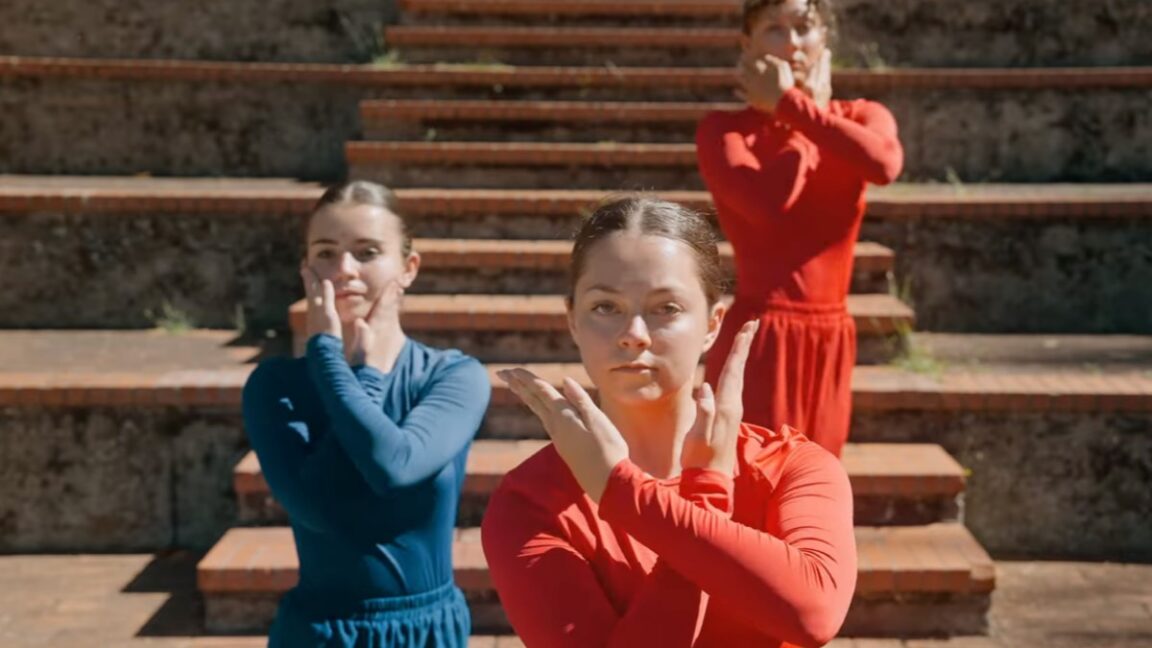
Finally, the Dance Your PhD contest celebrated its 2026 winner, Sofia Pappa, who creatively demonstrated the piezoelectric effect through dance. This contest, blending science and art, continues to inspire and entertain, showcasing the innovative ways scientists communicate complex ideas.
Key Concepts
The ability to adapt strategies and approaches to solve various problems, often involving creativity and adaptability.
The cognitive ability to remember the locations and spatial relationships of objects and environments.
Category
ScienceOriginal source
https://arstechnica.com/science/2026/04/research-roundup-7-cool-science-stories-we-almost-missed-3/More on Discover
Summarized by Mente
Save any article, video, or tweet. AI summarizes it, finds connections, and creates your to-do list.
Start free, no credit card