Immediate Physiological Effects of Sauna Use on Heart Rate
By Rocio Mexia Diaz, Kyriakos Eleftheriou
AI Summary
Saunas, a staple of Finnish culture, have long been celebrated for their therapeutic benefits, particularly in stimulating the cardiovascular system. When exposed to the intense heat of a sauna, the heart rate increases and blood vessels dilate, enhancing blood flow and promoting the elimination of toxins through sweat. This process aids in recovery, much like the ancient Roman baths designed for post-battle recuperation. While the long-term health advantages of regular sauna use are well-documented, this study delves into the immediate effects on heart rate, analyzing data from approximately 59,000 daily records of 256 users.
## Same-day Effects of Saunas
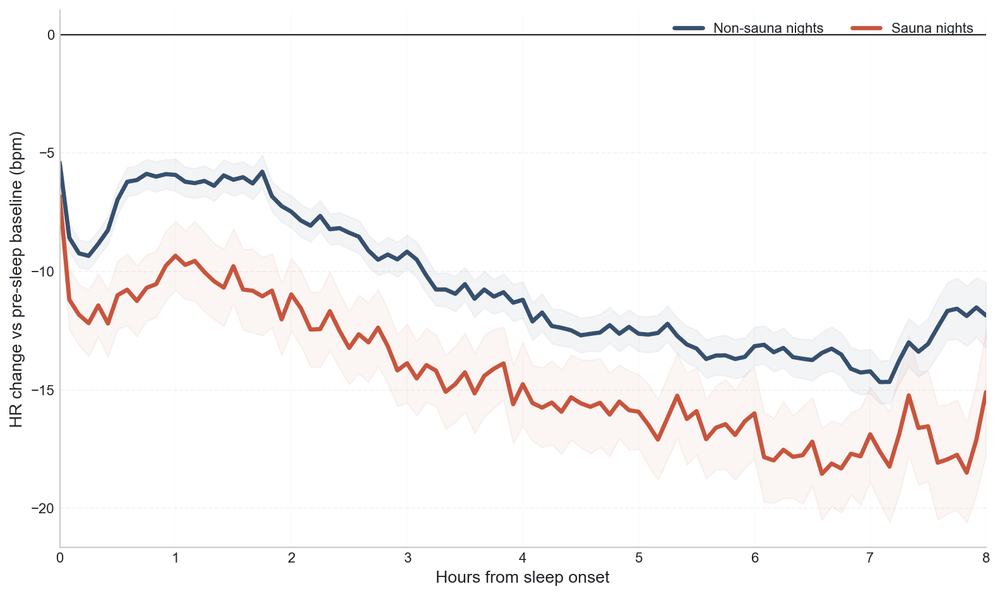
Using paired t-tests, we observed that sauna days correlate with increased physical activity, higher maximum and average heart rates, and a lower minimum heart rate compared to non-sauna days. Notably, the reduction in nighttime heart rate persists even after accounting for exercise, indicating a distinct physiological recovery signal. On average, the heart rate difference is about 5% (3 bpm), a significant change.
## Gender Differences in Sauna Effects
The study also explored gender-specific responses, revealing that women exhibit larger increases in activity on sauna days, yet experience a smaller decrease in nighttime heart rate compared to men. This variance may be influenced by the menstrual cycle, particularly during the luteal phase, where women show statistically significant higher activity and lower heart rates, suggesting that sauna benefits are more pronounced during this phase.
## Implications of Sauna Use
Sauna use is typically part of a recovery-focused routine, often following workouts. Despite increased activity, the lower nighttime heart rate on sauna days points to a recovery mechanism beyond exercise. This aligns with heat-stress physiology, where heart rate spikes during sauna exposure are followed by recovery dynamics, potentially indicating enhanced parasympathetic activity during cooling. For women, the most substantial recovery signals occur during the luteal phase, highlighting the nuanced benefits of sauna use.
Key Concepts
The body's physiological reaction to increased temperatures, involving elevated heart rate and vasodilation to manage heat stress and maintain homeostasis.
The process by which the body returns to a state of equilibrium after physical exertion or stress, often involving physiological adjustments like heart rate reduction and enhanced parasympathetic activity.
Category
HealthOriginal source
https://tryterra.co/research/sauna-effect-on-heart-rateMore on Discover
Summarized by Mente
Save any article, video, or tweet. AI summarizes it, finds connections, and creates your to-do list.
Start free, no credit card