Kim Kardashian: The Evolution of Celebrity into Hyperreality
By Logos - λόγος
AI Summary
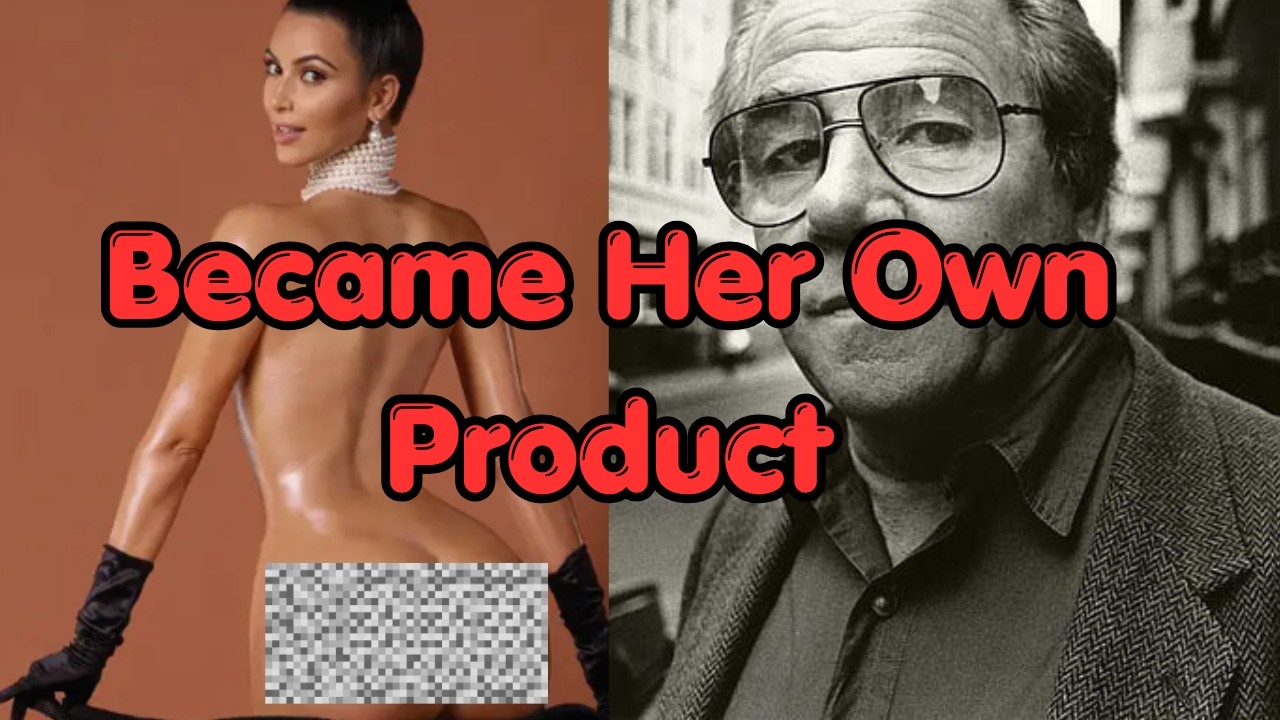
Kim Kardashian is not just a celebrity; she represents a system where image and reality have merged into a hyperreal order. Inspired by Jean Baudrillard's philosophy, she exemplifies a world where signs and images have overtaken the original realities they once represented. In this world, the image doesn't just hide the real; it creates it. Kim Kardashian is a brand that performs womanhood so fluently that her performance is mistaken for depth.
The traditional criticisms of her being fake or shallow miss the mark because they assume there's an authentic person behind the image. However, in the age of simulation, the image is the operating system through which reality is produced and circulated. Kim Kardashian is a complete symbolic object, a repeatable social sign that functions independently of any private self.
In the past, a portrait followed the person, but now the model comes first. Identity is no longer discovered but generated. This shift makes Kim Kardashian feel different from ordinary celebrities, as her image is not merely attached to her; it is the field in which she is made legible. Her public existence is formatted for circulation, making her a simulacrum rather than a star.
Kim's rise to fame, beginning with a leaked sex tape and reality TV, illustrates how visibility became the substance rather than a reward for substance. Reality TV formats people into recurring units of content, teaching audiences to read them as images. Kim's contradictions—mocked and admired, hypersexual and managerial—strengthen her image because they generate discourse and screen time.
The Kardashians' transition from cable TV to platform intimacy highlights how access is now a product of mediation, not its opposite. The promise is not truth but closeness, and unveiling does not restore the real but adds another layer to the model. The deeper you go, the more total the surface becomes.
Kim's brand, Skims, sells the body as operational and improvable, authenticated by Kim's visual authority in beauty labor and self-construction. A giant inflatable Kim in Times Square exemplifies how her image has become a deployable format, detached from the original person.
The game 'Kim Kardashian: Hollywood' allowed players to inhabit a Kardashian-shaped universe, turning Kim into an environment and a system of progression. This reflects how powerful signs no longer need external validation; they become habitable.
Despite being a real person with a material body and genuine ambitions, Kim's actions must pass through the image machine to acquire social force. Authenticity and seriousness are pre-processed as sign value within her media system. The distinction between image and essence has weakened, making every attempt to reveal her truth feel impotent.
Kim Kardashian is not just a celebrity; she is a cultural interface, a face turned into code, a body translated into a system of signs. Her image circulates and replaces the need for an original, demonstrating how modern identity prefers models to messy originals. She is a warning of a world where the image assembles the socially usable version of a person, and Baudrillard's vision of a sovereign copy becomes reality.
Key Concepts
Hyperreality is a condition in which reality is created by images and symbols that have no direct connection to the original reality they represent. It is a world where the distinction between reality and simulation blurs.
A simulacrum is a representation or imitation of a person or thing. In a philosophical context, it refers to a copy that has become more real than the original, often losing connection to any authentic source.
Category
PhilosophyOriginal source
https://youtu.be/J8OPp02B9VcMore on Discover
Summarized by Mente
Save any article, video, or tweet. AI summarizes it, finds connections, and creates your to-do list.
Start free, no credit card