Plato's Critique of Democracy: Lessons for Today
By Matthew Duncombe
AI Summary
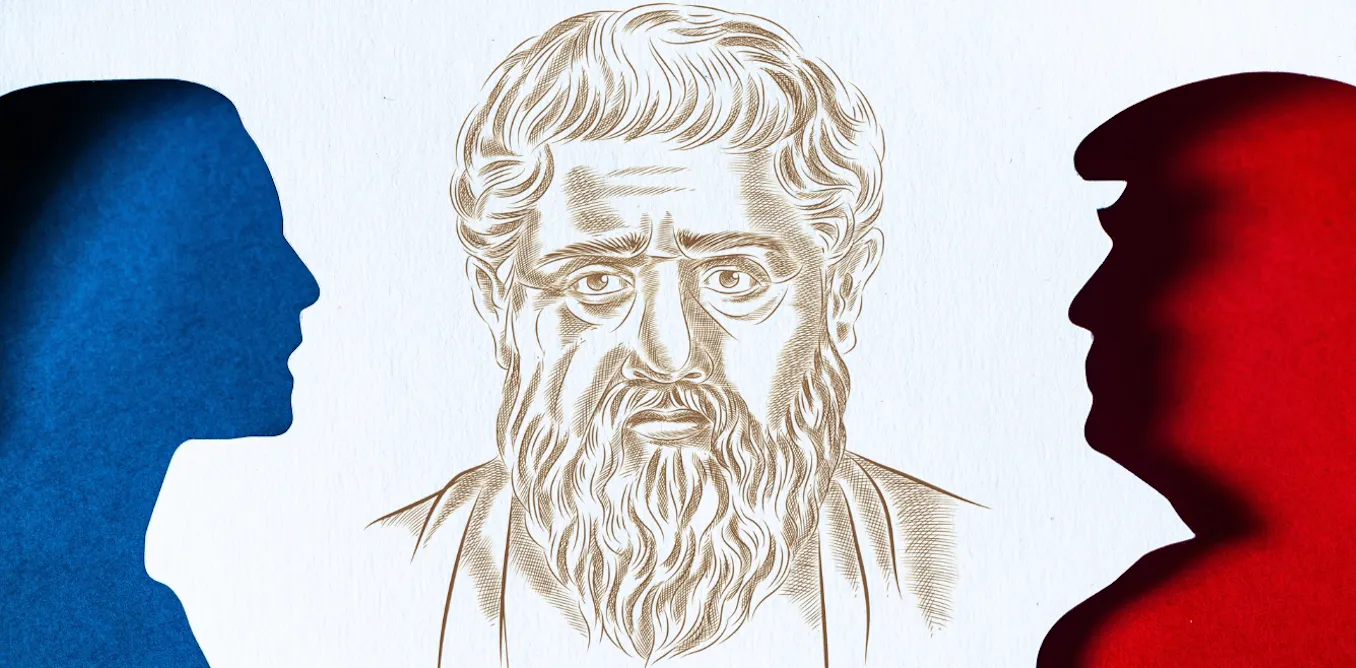
In 'The Republic', Plato, through the voice of Socrates, critiques the concept of democracy, a surprising stance given Greece's role as the birthplace of democratic ideals. Socrates argues that ruling is a skilled trade, akin to piloting a plane, and not everyone possesses the necessary talents or training to excel at it. He likens the democratic process to passengers electing one of their own to fly a plane, suggesting that such a system does not guarantee competent leadership. However, this analogy is not without its flaws.
Socrates' argument is that only those skilled in governance should rule, as the majority often lack the requisite skills. This critique extends beyond ancient Athenian democracy to modern systems, questioning whether the majority should have the power to govern. Yet, this perspective overlooks the potential for collective decision-making to be more skillful due to its diversity of knowledge and experience.
There are three main issues with Socrates' argument. First, the notion that ruling is a skill like flying a plane is debatable, as Plato's idea of 'knowing what is truly good' is vague. Second, even if ruling is a skill, it does not necessarily mean most people lack it, as skilled decision-makers exist in various fields. Third, including those without the skill in political processes might be beneficial, as it could train them or simply be fairer.
Despite the shortcomings of democracy highlighted by Socrates, such as the election of unskilled leaders, it does not warrant its rejection. Instead, nurturing political skills across the populace could enhance democracy, ensuring that everyone has a say in decisions that impact them, while leveraging the collective talents and experiences of all.
Key Concepts
A system of government where the citizens exercise power by voting. It is often characterized by fair elections, citizen participation, and the protection of human rights.
The idea that ruling a state requires specific skills and knowledge, similar to a trade or profession. It implies that not everyone is naturally equipped to govern effectively.
Category
PhilosophyOriginal source
https://theconversation.com/how-to-fix-democracy-ancient-philosopher-plato-may-have-an-answer-247602More on Discover
Summarized by Mente
Save any article, video, or tweet. AI summarizes it, finds connections, and creates your to-do list.
Start free, no credit card