The Fractal Legacy of Benoit Mandelbrot
By Maria Popova
AI Summary
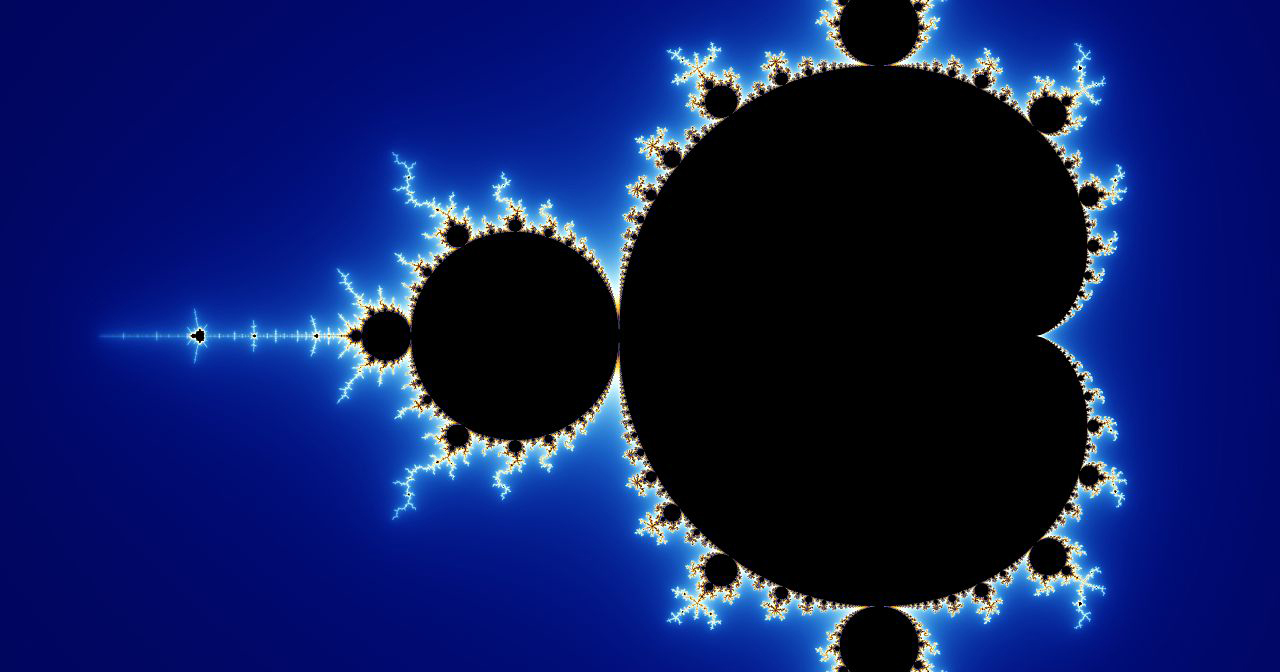
In the world of mathematics, Benoit Mandelbrot stands as a revolutionary figure who challenged traditional notions with his discovery of fractals. Unlike the linear forms of Euclidean geometry, fractals reveal the complex, self-similar patterns found in nature—from clouds and coastlines to broccoli and economic markets. Mandelbrot's insight into these 'regular irregularities' emerged from his study of cotton prices, leading to a lifetime of exploring the chaotic yet ordered patterns that define our universe.
Mandelbrot coined the term 'fractal' from the Latin 'fractus,' meaning broken, reflecting the jagged, recursive nature of these patterns. His work introduced a new geometry that mirrors the complexity of the natural world, standing alongside Euclid's ideal forms. Despite his outsider status in the mathematical community, Mandelbrot's contributions have reshaped our understanding of chaos and complexity, offering a new lens through which to view the world.
James Gleick, in his seminal book 'Chaos: The Making of a New Science,' likened Mandelbrot's impact on fractals to Rachel Carson's influence on ecology. Gleick's work helped embed fractals into popular culture, illustrating how these patterns serve as metaphors for understanding reality. Fractals, with their infinite detail and self-similarity, challenge our perceptions of simplicity and complexity, providing a continuous contour that never intersects itself.
Mandelbrot's journey was shaped by his experiences as a Jewish refugee in Europe, which instilled in him a unique perspective and resilience. Despite an irregular education, his geometric intuition allowed him to excel in mathematics, transforming complex problems into visual shapes that led to innovative solutions. This ability to see patterns where others saw chaos was central to his groundbreaking work.
At the core of Mandelbrot's legacy is the concept of self-similarity, where fractal curves appear identical at any scale of magnification. This 'symmetry across scale' became emblematic of chaos theory, challenging our fundamental ideas about order and disorder. Mandelbrot's work continues to inspire, offering a model for understanding the intricate patterns that govern both nature and human-made systems.
Key Concepts
Fractals are complex geometric shapes that can be split into parts, each of which is a reduced-scale copy of the whole. They exhibit self-similarity and are often found in nature, such as in the patterns of snowflakes, mountains, and coastlines.
Chaos theory studies the behavior of dynamical systems that are highly sensitive to initial conditions, often leading to seemingly random states of disorder and irregularity.
Category
ScienceMore on Discover
Summarized by Mente
Save any article, video, or tweet. AI summarizes it, finds connections, and creates your to-do list.
Start free, no credit card