The Image Boards of Hayao Miyazaki: A Journey Through His Creative Process
By Animation Obsessive Staff
AI Summary
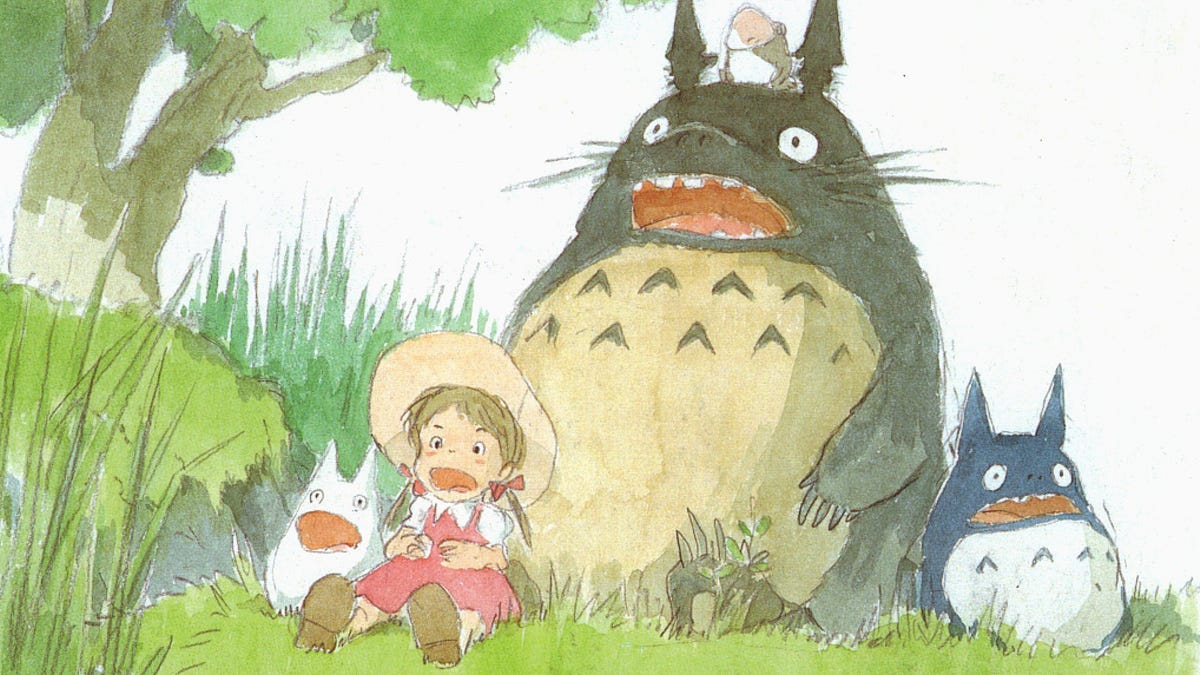
Hayao Miyazaki's career, spanning over six decades, is a testament to his ever-evolving artistry and the constant reinvention of his creative process. At 82, with the release of 'The Boy and the Heron,' Miyazaki once again showcased his ability to transform and adapt, a skill that has been a hallmark since his early days at Toei Doga in 1963. Central to his creative process are his 'image boards,' which are not storyboards but rather conceptual sketches that capture the essence and direction of a project. These boards, which Miyazaki began drawing during his work on 'Horus: Prince of the Sun' in 1968, serve as a visual guide for the entire team, offering a glimpse into the film's potential and direction.
Miyazaki's image boards are characterized by their rough, energetic style, a reflection of his youthful enthusiasm and cinematic vision. Over time, his technique matured, and the roughness evolved into a deliberate looseness that captured the charm and warmth of his ideas. During the 1970s, Miyazaki's image boards became a staple of his creative output, used for both actual productions and unrealized projects. His ability to reuse and reimagine past sketches is evident in works like 'Panda! Go, Panda!' where ideas from the unmade 'Pippi Longstocking' were repurposed.
The 1970s also marked a period of frustration for Miyazaki as he worked under Isao Takahata on projects like 'Heidi: Girl of the Alps' and '3,000 Leagues in Search of Mother.' These projects, which leaned towards naturalism, left Miyazaki feeling disconnected from his themes. Despite this, he continued to sketch ideas, including early concepts for 'My Neighbor Totoro,' which would later become iconic.
Miyazaki's directorial debut with 'Future Boy Conan' in 1978 allowed him to unleash a torrent of suppressed creativity, drawing countless image boards filled with imaginative ideas. Although the series was not a ratings success, it marked a turning point in Miyazaki's career, leading to his first feature film, 'The Castle of Cagliostro.' Despite its commercial failure, the film was a culmination of Miyazaki's early work and a realization that he needed to innovate beyond his past achievements.
In the early 1980s, Miyazaki's image boards laid the groundwork for 'Nausicaä of the Valley of the Wind,' a film that marked a departure from his previous style. Influenced by artists like Mœbius and Richard Corben, Miyazaki's sketches began to incorporate new artistic elements, leading to a richer visual style that would define his later works.
Throughout his career, Miyazaki's image boards have been a constant, evolving alongside his artistic journey. From the early sketches of 'Horus' to the refined concepts of 'Spirited Away' and 'The Boy and the Heron,' these boards capture the essence of Miyazaki's imagination. Even as he approaches his later years, his ability to mesmerize with a simple sketch remains undiminished, as evidenced by the success of 'The Boy and the Heron' and its evocative poster, which features a snippet of an image board.
Miyazaki's image boards are more than just sketches; they are a window into his creative mind, a testament to his enduring legacy in animation. As he continues to create, his image boards remain a vital part of his process, capturing the magic and wonder that define his films.
Key Concepts
Image boards are preliminary sketches or concept art used to capture the overall feel and direction of a project. Unlike storyboards, they are not meant for strict continuity but serve as a visual guide for the creative team.
The creative process is the series of steps and methods an artist or creator uses to develop and refine their work. It involves ideation, experimentation, and iteration to bring a concept to fruition.
Category
ArtMore on Discover
Summarized by Mente
Save any article, video, or tweet. AI summarizes it, finds connections, and creates your to-do list.
Start free, no credit card