The Profound Language of Flowers and Human Connection
By Maria Popova
AI Summary
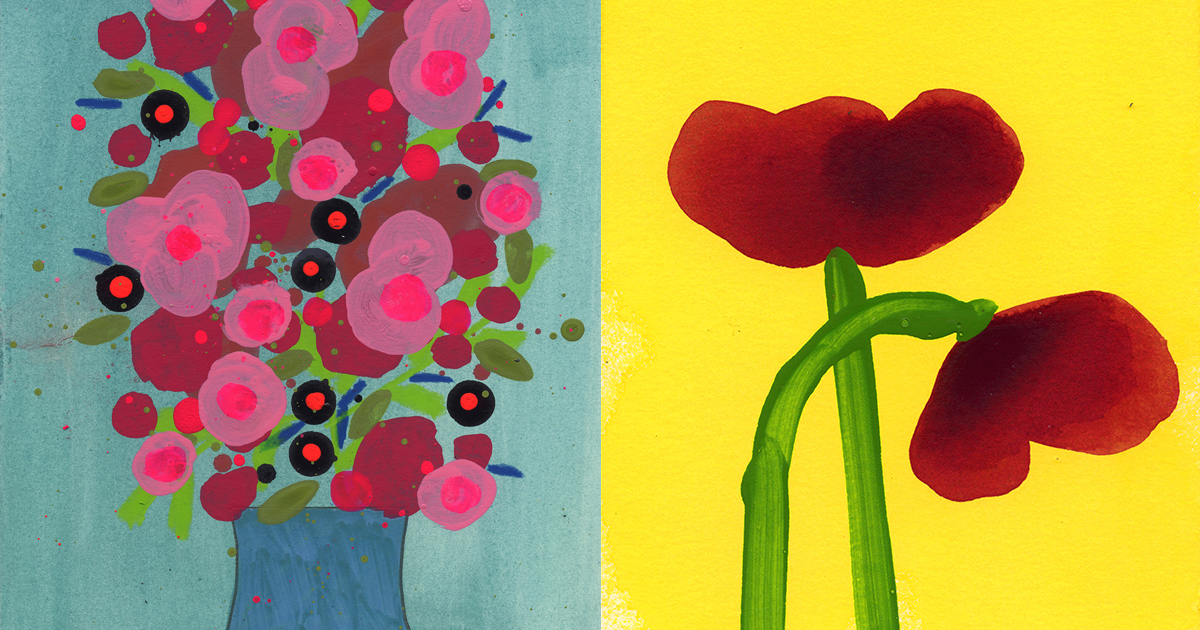
Emily Dickinson once mused that being a flower carries a profound responsibility, a sentiment that resonates deeply in the symbolic language of flowers throughout history. Flowers have long served as vessels for emotions too vast for words, from funeral wreaths to bridal bouquets, embodying the unspeakable depths of human feeling. Artist Tucker Nichols, drawing from a personal experience of illness and the solace found in human connection, began painting flowers for those suffering during the pandemic. His project, 'Flowers for Things I Don’t Know How to Say,' offers a floral lexicon for the myriad emotions we struggle to articulate, from despair to quiet joy. Nichols' paintings, vibrant and abstract, reflect the complexity of our inner lives and the universal nature of our feelings, creating a tapestry of shared human experience. Through his art, Nichols reminds us that while our emotions may feel singular and isolating, they are part of a collective human garden, connecting us across time and space.
Key Concepts
The symbolic language of flowers involves using flowers to convey emotions and messages that words cannot fully express. This language has been used throughout history in various cultures to communicate sentiments such as love, grief, and hope.
Human connection refers to the emotional and social bonds that form between people, providing support, empathy, and understanding. It is a fundamental aspect of human life, essential for emotional well-being and resilience.
Category
ArtMore on Discover
Summarized by Mente
Save any article, video, or tweet. AI summarizes it, finds connections, and creates your to-do list.
Start free, no credit card