The Rise and Fall of Technocracy: A Vision for a Technological Society
By Do Not Research, Anton Cebalo
AI Summary
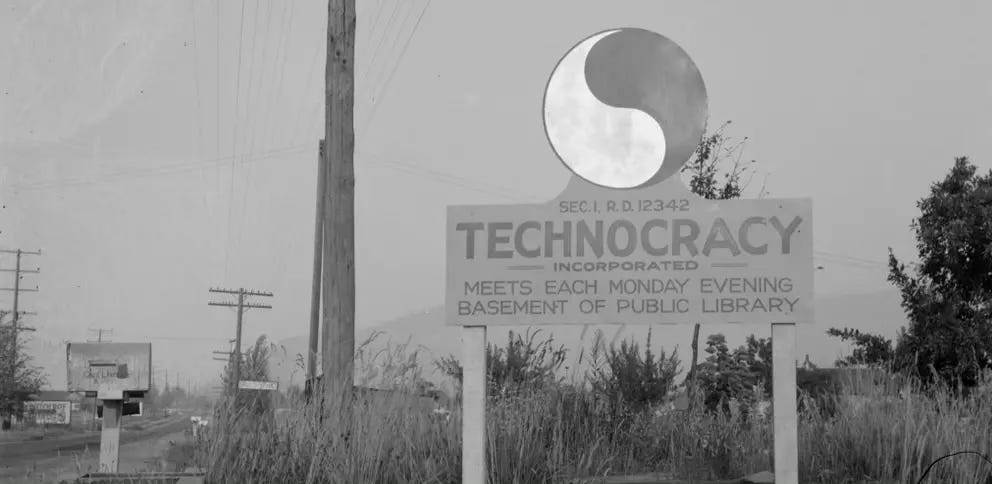
In the early 20th century, Howard Scott emerged as a prominent advocate for technocracy, a radical idea proposing a society governed by engineers and technicians rather than politicians. This movement, known as Technocracy Incorporated, envisioned a future where technology and science would lead to a utopian society of abundance and efficiency. Scott's followers, who dressed in gray and adopted Roman salutes, believed in a centralized state called 'The Technate,' where resources would be allocated through 'energy accounting' and citizens would use 'energy distribution cards' for purchases.
Technocracy gained significant traction during the Great Depression, attracting hundreds of thousands of members and the attention of futuristic writers like Hugo Gernsback and Ray Bradbury. However, as Scott's claims grew more delusional and his lack of scientific credentials was exposed, the movement's popularity waned. Despite its decline, some of its core ideas have resurfaced in the 21st century, as today's tech elites pursue similar philosophies through covert means.
The original technocracy movement believed in the power of social engineering, where every aspect of life could be quantified and optimized for efficiency. Although the technology of the 1930s was insufficient for such grand plans, today's tech companies have the data and algorithms to influence societal outcomes. This modern iteration of technocracy raises concerns about free will and the potential for Big Data to control mass behavior.
Today's technocrats, like venture capitalists and tech leaders, view technology as the ultimate revolutionary force, capable of transforming society. They push for technological advancement despite potential catastrophic outcomes, often sidelining public interests. This mirrors the original technocracy's elitist belief that democracy is inferior and that a select group of 'technician geniuses' should lead.
The pursuit of efficiency and progress at all costs, as described by Jacques Ellul in 'The Technological Society,' remains a central theme. Ellul warned that once technological progress accelerates, society loses the ability to make choices, adapting to changes against its will. This relentless drive for efficiency often undermines other values, leading to solutions like on-demand therapists or virtual friends to address societal issues.
While the original technocracy movement required public consent, today's tech elites operate without a democratic mandate, facing a skeptical public increasingly disillusioned with their vision. This tension between technological progress and public interest will continue to shape politics in the coming years.
Key Concepts
Technocracy is a system of governance where decision-makers are selected based on their expertise in a given area of technology, rather than elected by popular vote. It emphasizes the role of technical experts in managing societal resources and functions.
Social engineering refers to the use of centralized planning in an attempt to manage social change and regulate the future development and behavior of a society.
Category
TechnologyMore on Discover
Summarized by Mente
Save any article, video, or tweet. AI summarizes it, finds connections, and creates your to-do list.
Start free, no credit card