Underground Bee Metropolis Thrives Beneath Cemetery
By Anastasia Scott
AI Summary
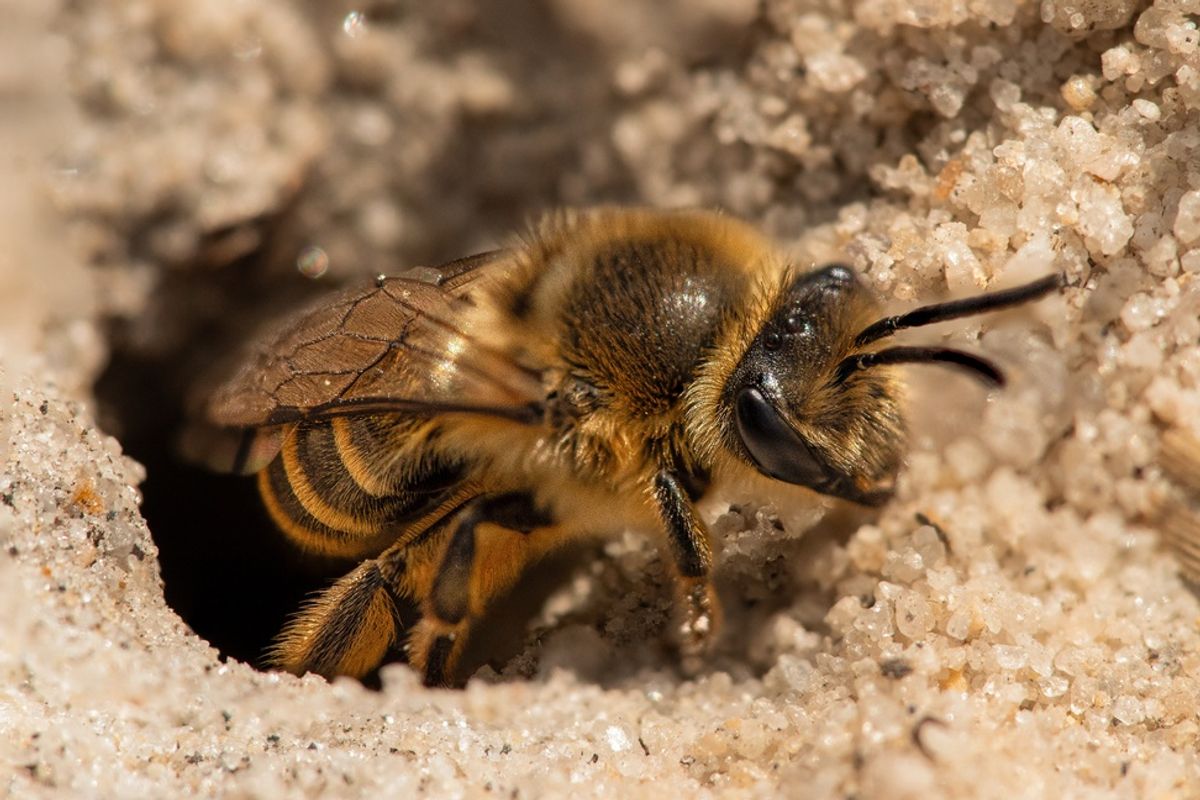
Beneath the serene surface of East Lawn Cemetery in Ithaca, New York, lies a bustling underground city of bees. This remarkable discovery reveals one of the largest known aggregations of ground-nesting solitary bees, specifically the species Andrena regularis. These bees, crucial pollinators for crops like apples and blueberries, have been thriving here since the 1930s. Researchers estimate that between 3.1 to 8 million bees emerge from a single section of the cemetery each spring.
To understand the density of this bee population, scientists used mesh emergence traps to capture and count the bees as they surfaced. They found an astonishing density of over 800 bees per square meter. Unlike honeybees, these solitary bees do not form hives but live independently, with each female digging her own nest underground. These nests form a dense network just beneath the soil, going largely unnoticed by cemetery visitors.
Interestingly, the cemetery's undisturbed environment provides the stability these bees need to thrive. The bees emerge in early spring, with activity peaking as temperatures rise, before disappearing until the next season. This timing also affects parasitic bees like Nomada imbricata, which lay their eggs in the nests of A. regularis. However, the parasitism rate is low, possibly due to the staggered emergence of the parasitic bees.
The study underscores the importance of preserving such large nesting aggregations of solitary bees. These bees are not only vital for ecosystem health but also play a significant role in agricultural pollination. Their ability to deposit more pollen than managed honeybees highlights their value, particularly in regions where they are native pollinators.
This discovery at the cemetery offers a unique glimpse into the hidden lives of solitary bees and emphasizes the need to protect their habitats to maintain biodiversity and support agriculture.
Key Concepts
Ground-nesting solitary bees are a type of bee that builds individual nests in the soil rather than forming colonies or hives. Each female bee creates her own nest, where she lays eggs and provides food for her offspring.
Pollination is the process by which pollen is transferred from the male part of a plant to the female part, enabling fertilization and the production of seeds. It is a crucial ecological function that supports plant reproduction and biodiversity.
Category
BiologyOriginal source
https://www.discovermagazine.com/up-to-8-million-bees-are-living-in-an-underground-network-beneath-this-cemetery-48977More on Discover
Summarized by Mente
Save any article, video, or tweet. AI summarizes it, finds connections, and creates your to-do list.
Start free, no credit card