Ancient Native American Dice Reveal Early Understanding of Probability
By Jennifer Ouellette
AI Summary
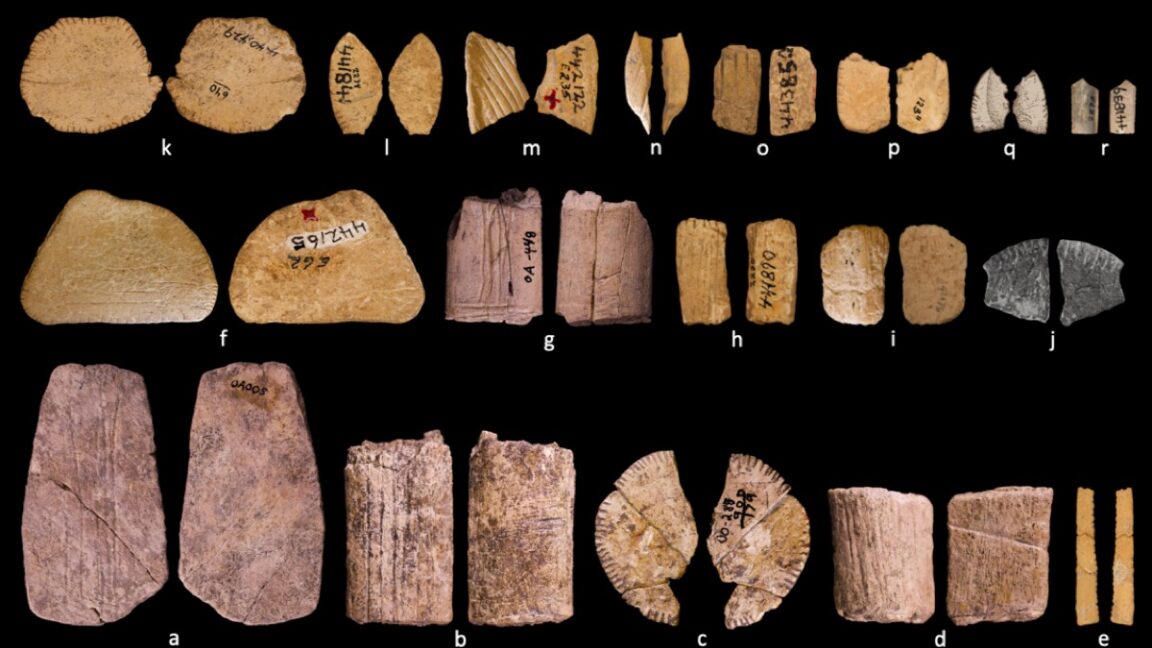
In a fascinating exploration of ancient artifacts, Madden identified 565 Native American dice from 45 sites, with an additional 94 artifacts likely being dice as well. Excluding objects with drilled holes or indistinct markings, Madden focused on items dating back 12,000 years to the end of the last Ice Age in regions like Wyoming, Colorado, and New Mexico. Unlike modern gambling, these dice games were social, fostering relationships through fair play without a 'house' edge. They served as a form of exchange, promoting enduring connections between groups unfamiliar with each other. This research challenges the notion that probabilistic thinking originated in the Old World during the Bronze Age, suggesting that Native Americans engaged in games of chance and probabilistic reasoning 6,000 years earlier. While not formal probability theory, these games relied on random outcomes and probabilistic regularities, reshaping our understanding of the global history of probabilistic thought.
Key Concepts
Probabilistic thinking involves understanding and using the likelihood of different outcomes to make predictions or decisions. It is a foundational concept in mathematics and statistics, often associated with games of chance and risk assessment.
Games often serve as social tools that facilitate interaction, cooperation, and relationship-building among participants. They can provide a structured environment for social exchange and cultural expression.
Category
HistoryOriginal source
https://arstechnica.com/science/2026/04/ice-age-dice-show-early-native-americans-may-have-understood-probability/More on Discover
Summarized by Mente
Save any article, video, or tweet. AI summarizes it, finds connections, and creates your to-do list.
Start free, no credit card