Decoding the Six Characters: Understanding PNRs in Air Travel
By Ajitem Sahasrabuddhe
AI Summary
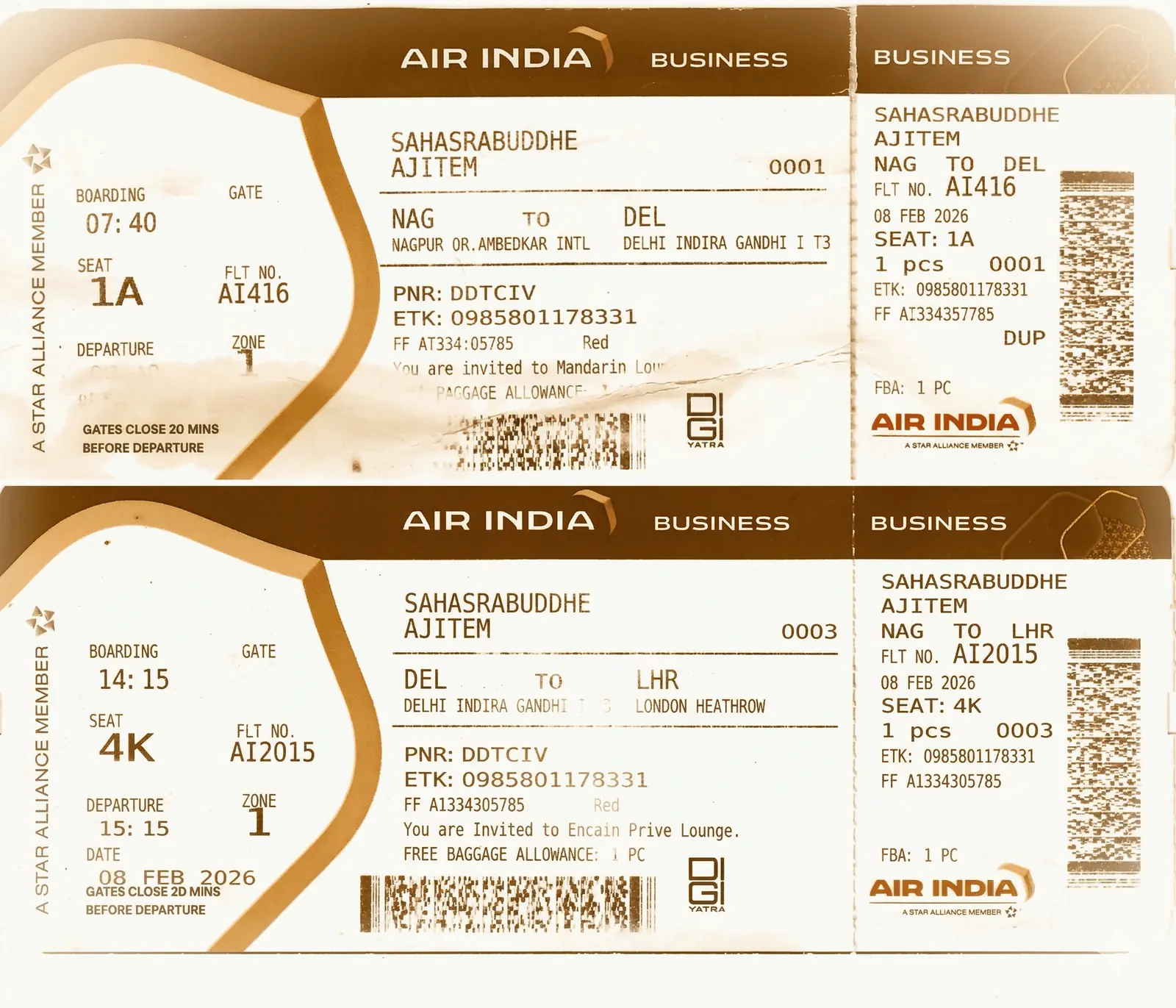
In the intricate world of air travel, the Passenger Name Record (PNR) is a pivotal element, serving as the canonical data structure for every IATA-scheduled passenger booking. Born in the 1960s and formalized as Recommended Practice 1830 by IATA, the PNR is not a traditional database entry but a structured document akin to an append-only log, housed within the Global Distribution System (GDS) that created it. My PNR, DDTCIV, is unique within Amadeus's system but not globally, highlighting the necessity for airlines to maintain their own Record Locator for cross-referencing.
The PNR is built on five mandatory elements: Name, Itinerary, Address/Phone, Ticketing, and Received From. These elements form the contract between the booking system and the airline, ensuring a minimum viable data structure that can be processed swiftly and stored efficiently. Notably absent are details like passport numbers or payment information, which are optional enrichments.
Decoding my PNR reveals a detailed itinerary and contact information, with each segment's status crucial for confirming seats. The e-ticket number, however, is the true primary key of a booking, remaining stable even as PNR segments change. This number is globally unique within the issuing airline and is validated against the airline's Electronic Ticket Database (ETD) at boarding.
The fare calculation line on my e-ticket uses IATA's fare construction notation, a language standardized in the 1970s. It breaks down the journey into components, using a Neutral Unit of Construction (NUC) to price fares consistently across fluctuating currencies. The system allows for a stable fare quotation by applying the exchange rate at ticketing time, a solution to the multi-currency pricing problem.
The return fare line, priced in GBP due to its origin in Manchester, follows the same logic, demonstrating the flexibility and consistency of the NUC system. The tour code embedded in the ticketing element links the booking to Technogise's corporate account, facilitating financial reconciliation across multiple organizations.
This exploration underscores the complexity and precision of aviation systems, where identifiers like PNR locators and e-ticket numbers play distinct roles. The NUC system's approach to pricing offers insights applicable to other domains facing similar currency fluctuation challenges. Each field in an IATA document, including seemingly redundant surcharges, exists due to historical needs and industry-wide agreements, reflecting the intricate balance of global aviation operations.
Key Concepts
A PNR is a structured document used in air travel to store essential booking information. It is not a traditional database record but an append-only log created by the Global Distribution System (GDS).
The NUC is a currency-neutral unit used by IATA to price airfares consistently across different currencies. It allows for stable fare quotations by applying the exchange rate at the time of ticketing.
Category
TravelOriginal source
https://ajitem.com/blog/iron-core-part-2-six-characters/More on Discover
Summarized by Mente
Save any article, video, or tweet. AI summarizes it, finds connections, and creates your to-do list.
Start free, no credit card