Europe's Mars Rover Finally Secures a Launch with SpaceX
By Stephen Clark
AI Summary
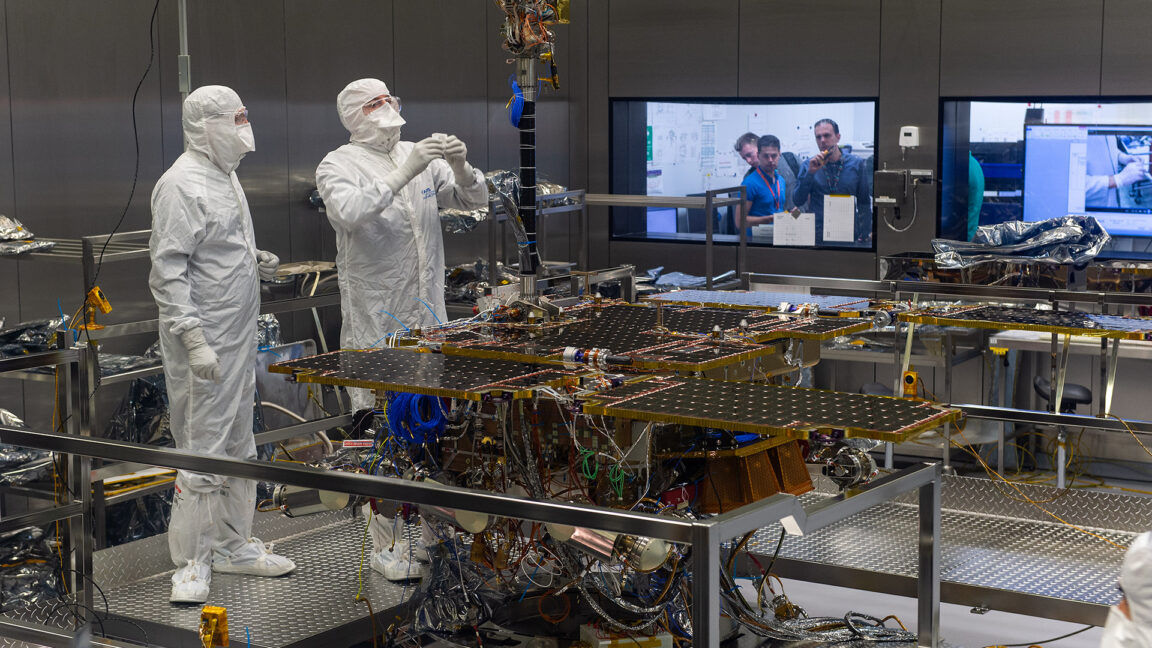
After years of delays and geopolitical challenges, the European Space Agency's (ESA) Rosalind Franklin Mars rover is set to launch on SpaceX's Falcon Heavy rocket, aiming for a 2028 departure from Kennedy Space Center. Initially part of ESA's Aurora program, the mission faced numerous setbacks, including NASA's withdrawal due to budget constraints and the severing of ties with Russia following its invasion of Ukraine. These disruptions led to a series of changes in launch partners and mission plans. Originally planned for a 2009 launch, the rover's journey has been a saga of international collaboration and political hurdles.
The mission, once a joint venture with NASA, was forced to pivot to Russian collaboration after NASA pulled out in 2012. Russia successfully launched the ExoMars Trace Gas Orbiter in 2016, but the partnership ended abruptly in 2022 due to geopolitical tensions. ESA then turned back to NASA, which agreed to provide critical components for the rover's journey and landing on Mars. The Falcon Heavy will be the fourth rocket planned for this mission, marking a significant milestone in ESA's efforts to explore Mars.
Despite these challenges, the mission's scientific goals remain vital. The Rosalind Franklin rover will be the first to drill up to 6 feet into the Martian surface, seeking organic molecules that could indicate past life, shielded from radiation by the planet's crust. This capability, along with its advanced mobility features like six-wheel steering and 'wheel walking,' sets it apart from other missions.
The mission's relevance is underscored by its potential to uncover clues about ancient Martian life, a task no other planned mission is set to undertake. ESA's perseverance through political and technical challenges highlights the importance of international cooperation in space exploration. With NASA's renewed support and SpaceX's involvement, the mission is poised to finally take flight, continuing the quest to understand Mars's history and potential for life.
Key Concepts
The cooperative efforts between different countries and their respective space agencies to achieve common goals in space exploration. This often involves sharing resources, technology, and expertise.
The influence of international politics on the planning, execution, and success of space missions. These challenges can affect partnerships, funding, and mission timelines.
Category
Space ExplorationOriginal source
https://arstechnica.com/space/2026/04/after-a-saga-of-broken-promises-a-european-rover-finally-has-a-ride-to-mars/More on Discover
Summarized by Mente
Save any article, video, or tweet. AI summarizes it, finds connections, and creates your to-do list.
Start free, no credit card