Intel's New Non-Ultra Core CPUs: A Fresh Silicon Approach
By Andrew Cunningham
AI Summary
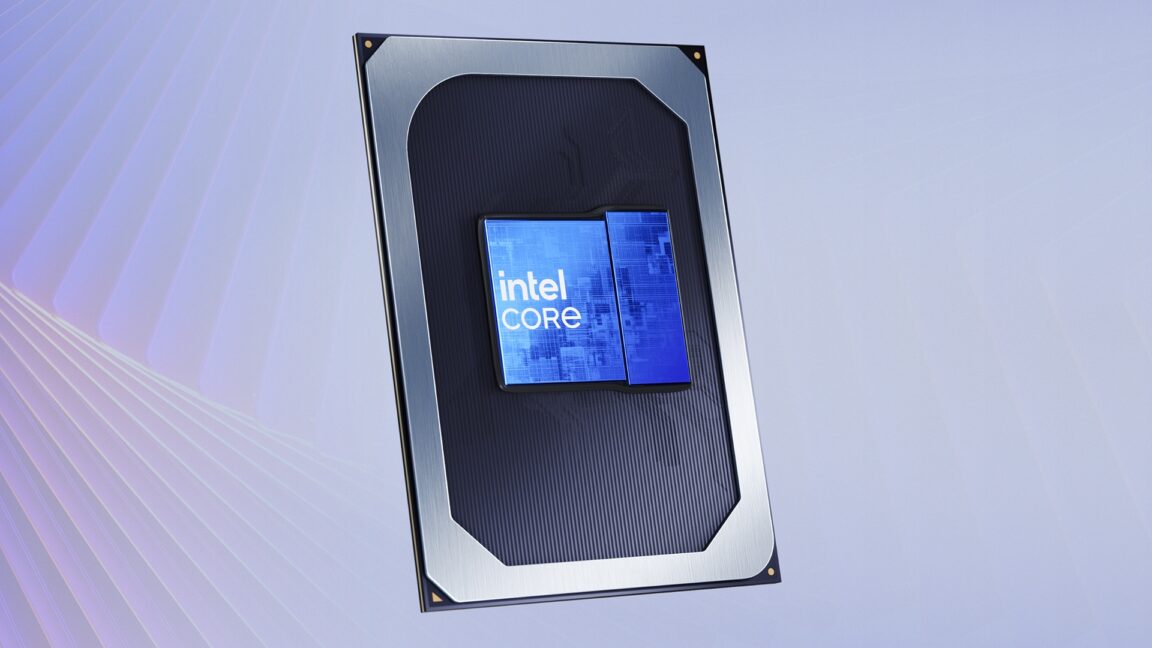
Intel has revamped its lineup with the introduction of new non-Ultra Core Series 3 processors, marking a departure from the older Raptor Lake architecture. These new chips, codenamed 'Wildcat Lake,' offer a simpler design compared to the Core Ultra Series 3, known as 'Panther Lake.' Despite their simplicity, they incorporate modern technology with two silicon tiles: a compute tile featuring up to two Cougar Cove P-cores and four Darkmont E-cores, and an integrated GPU with one or two Xe3 cores. Additionally, they include an NPU capable of 17 trillion operations per second.
The platform controller tile, built on a non-Intel process, enhances connectivity with features like Thunderbolt 4 ports, Wi-Fi 7, Bluetooth 6.0, and PCIe 4.0 lanes. These chips support up to 48GB of LPDDR5X-7467 or 64GB of DDR5-6400 memory, operating at a base power level of 15 W and a maximum boost power level of 35 W. This new silicon approach is a nod to Intel's past, where high-end and midrange chips shared many advancements, despite their performance differences.
Key Concepts
CPU architecture refers to the design and organization of a computer's central processing unit, determining how it processes information and executes instructions.
Silicon design involves the creation and layout of semiconductor devices, which are the building blocks of electronic circuits, including CPUs and GPUs.
Category
TechnologyOriginal source
https://arstechnica.com/gadgets/2026/04/intels-non-ultra-core-cpus-are-new-silicon-this-year-for-a-change/More on Discover
Summarized by Mente
Save any article, video, or tweet. AI summarizes it, finds connections, and creates your to-do list.
Start free, no credit card