Rocket Report: SpaceX and Blue Origin's Latest Developments
By Stephen Clark
AI Summary
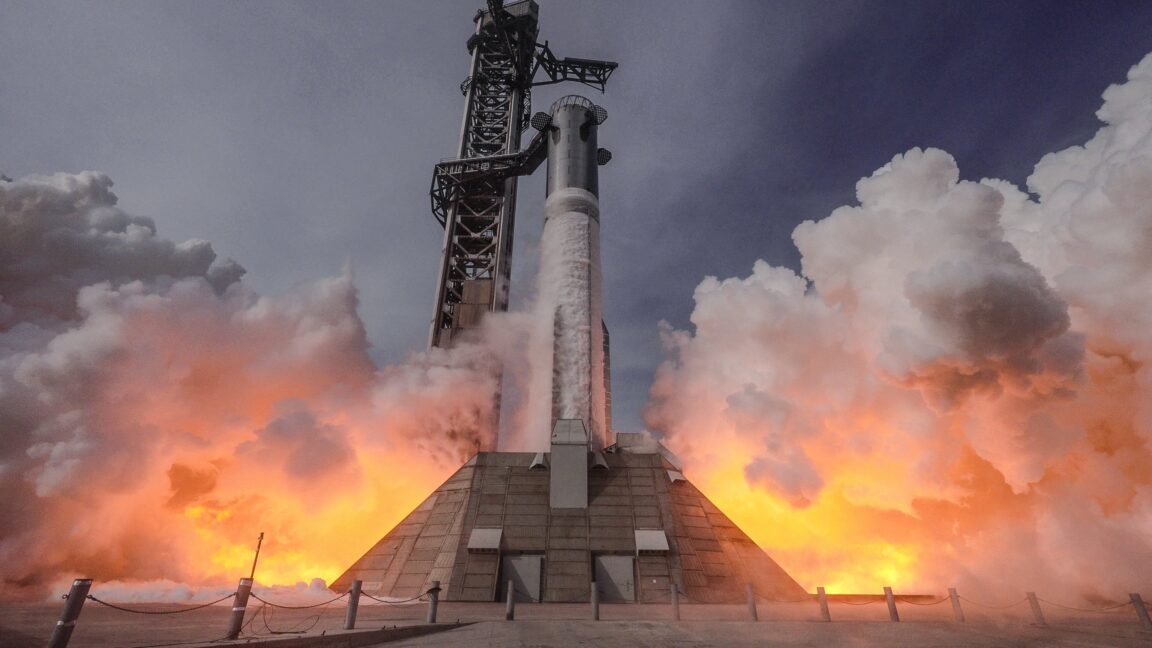
In the latest edition of the Rocket Report, we dive into the exciting advancements in space exploration. Blue Origin is preparing for the third flight of its New Glenn rocket, now utilizing a reused booster, marking a significant step in their reusable rocket technology. Meanwhile, SpaceX's Super Heavy booster successfully fired its 33 Raptor engines at Starbase, Texas, setting the stage for the next phase of their ambitious Starship program.
## Lunar Ambitions
NASA is riding high after the Artemis II mission, the first human journey to the Moon since 1972. The focus now shifts to developing a lunar lander, with SpaceX and Blue Origin leading the charge as NASA's contractors. This progress is crucial for future lunar exploration missions.
## Innovative Launch Technologies
Moonshot Space, an Israeli company, is making waves with its electromagnetic accelerator in Alaska, aiming to revolutionize space launches by using electricity instead of chemical fuels. This bold approach could transform how payloads are delivered to space, although the high accelerations pose challenges for traditional satellites.
## Rocket Lab's Expanding Portfolio
Rocket Lab is enhancing its capabilities with the Gauss thruster, a high-performance electric propulsion system. This addition aligns with their strategy to offer comprehensive space manufacturing and services, complementing their existing Electron and Neutron rockets.
## International Collaborations and Challenges
SpaceX recently launched a Cygnus cargo ship to the ISS for Northrop Grumman, highlighting the collaboration between these two NASA resupply contractors. With Northrop's Antares rocket currently out of service, SpaceX's Falcon 9 is stepping in to ensure continued supply missions.
China is also making strides with its Long March 10B rocket, preparing for a potential launch soon. This rocket family, equipped with reusable boosters, represents China's growing capabilities in space exploration.
## European Space Agency's Initiatives
The ESA is exploring a Crew Launch Abort Demonstrator, a critical step towards developing independent human spaceflight capabilities. This project could pave the way for a European cargo transportation system, although ESA has historically relied on international partnerships for manned missions.
## ULA's Vulcan Rocket Challenges
The Vulcan rocket faces setbacks, impacting the US Space Force's launch plans. With delays and technical issues, the Space Force is considering alternative launch vehicles like SpaceX's Falcon 9 to maintain its satellite deployment schedule.
## Mars Missions and Future Prospects
NASA has confirmed that SpaceX will launch ESA's Rosalind Franklin Mars rover, marking SpaceX's first mission to Mars. This collaboration underscores the complex geopolitical and technical challenges in space exploration, especially following Russia's invasion of Ukraine.
## Upcoming Launches
Blue Origin is set to launch its third New Glenn rocket, while SpaceX prepares for multiple Falcon 9 launches, including a GPS satellite mission. These launches reflect the dynamic and rapidly evolving landscape of the space industry.
Key Concepts
A technology that allows rockets or their components to be recovered and reused for multiple launches, reducing costs and increasing launch frequency.
A launch system that uses electromagnetic forces to accelerate payloads to high speeds, potentially offering a more efficient alternative to traditional chemical propulsion.
Category
Space ExplorationOriginal source
https://arstechnica.com/space/2026/04/rocket-report-starship-v3-test-fired-esas-tentative-step-toward-crew-launch/More on Discover
Summarized by Mente
Save any article, video, or tweet. AI summarizes it, finds connections, and creates your to-do list.
Start free, no credit card